Commercial Commercial Commercial Asphalt Paving
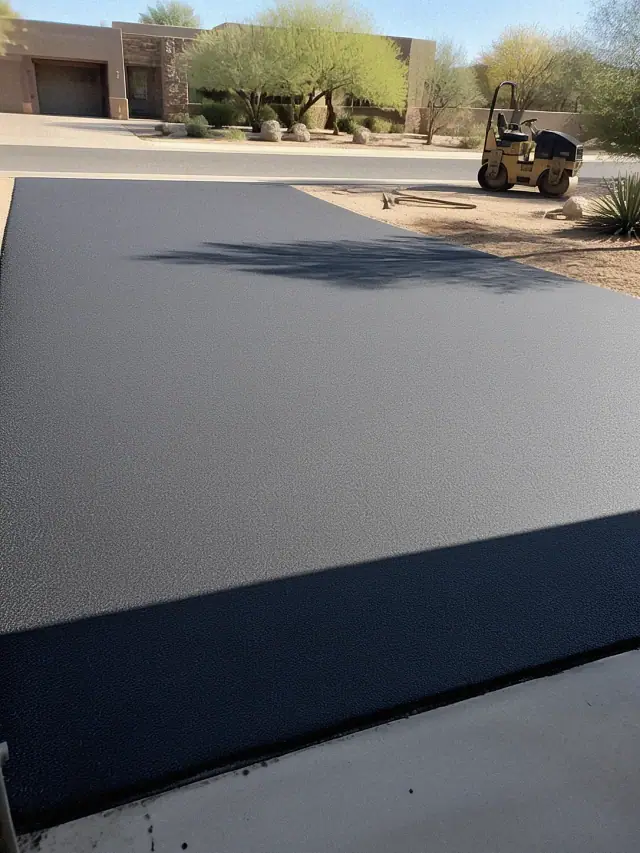
We pave commercial parking lots, private roads, loading areas, and other high-traffic surfaces with site-specific base preparation, drainage, mix, and phasing.
Explore Service
Scottsdale Asphalt provides professional asphalt paving, driveway installation and replacement, and parking lot paving throughout Scottsdale, Arizona. Our crews also handle asphalt repair, resurfacing and overlays, sealcoating, crack sealing, pothole repair, parking lot striping, and asphalt milling and removal. We work on residential driveways, HOA common areas, retail centers, office properties, medical facilities, and industrial sites. Every project is planned around the property's traffic load, soil conditions, drainage needs, and exposure to desert heat.
Scottsdale summers regularly exceed 110°F, and relentless UV exposure accelerates binder oxidation until unprotected pavement becomes brittle. Caliche layers, sandy soils, and monsoon runoff also create base-stability and drainage problems when grading or compaction is inadequate. As a licensed and insured Arizona asphalt contractor, we select mix designs, base depths, and installation methods for local conditions rather than applying a one-size-fits-all specification. That preparation helps reduce premature cracking, rutting, raveling, and standing-water damage.
We provide free asphalt estimates with clear line-item detail and recommend repair, overlay, resurfacing, or replacement according to the pavement's actual condition. From South Scottsdale driveways to North Scottsdale HOA lots and commercial properties near Old Town, customers receive clear scheduling, organized job sites, and professional results.
Built for Scottsdale
Scottsdale Asphalt handles new construction, replacement, repair, restoration, and long-term maintenance. Each service begins with an evaluation of the surface, base, drainage, traffic demands, and local heat exposure so the recommended scope addresses the cause of failure instead of covering it temporarily.
We pave commercial parking lots, private roads, loading areas, and other high-traffic surfaces with site-specific base preparation, drainage, mix, and phasing.
Explore Service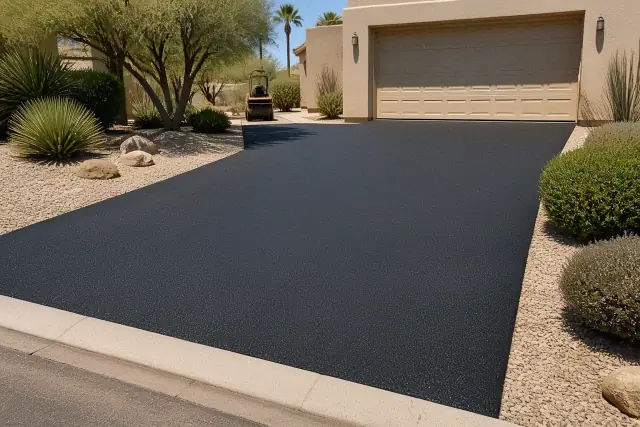
A durable driveway depends on work below the finished surface. We remove failed material when replacement is needed, grade drainage away from structures, compact an aggregate base for passenger-vehicle loads, and finish clean edges and smooth transitions at garage aprons and sidewalks. With proper installation and maintenance, a Scottsdale asphalt driveway can last 20 to 30 years.
Explore Service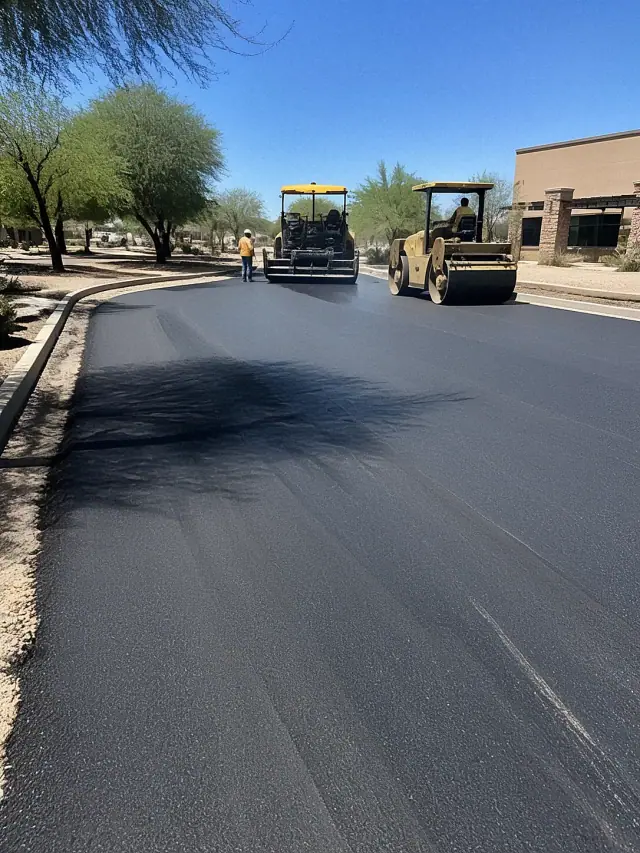
Commercial parking lots face concentrated wheel loads, repetitive turning, and summer surface temperatures that can exceed 160°F. We match base thickness, asphalt stability, and drainage slope to parking fields, drive aisles, entrances, and loading areas, then phase larger projects to help properties maintain customer and tenant access.
Explore Service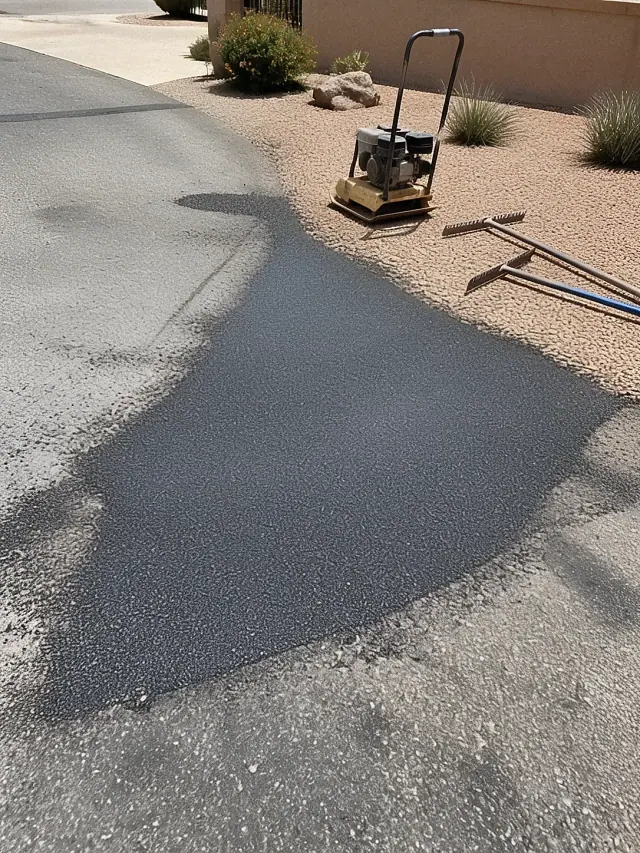
We diagnose the width, depth, pattern, and cause of pavement distress before selecting crack repair, patching, base correction, or resurfacing. Time-sensitive potholes and failed sections receive a professional repair scope rather than a temporary surface fill, helping reduce liability and repeat damage.
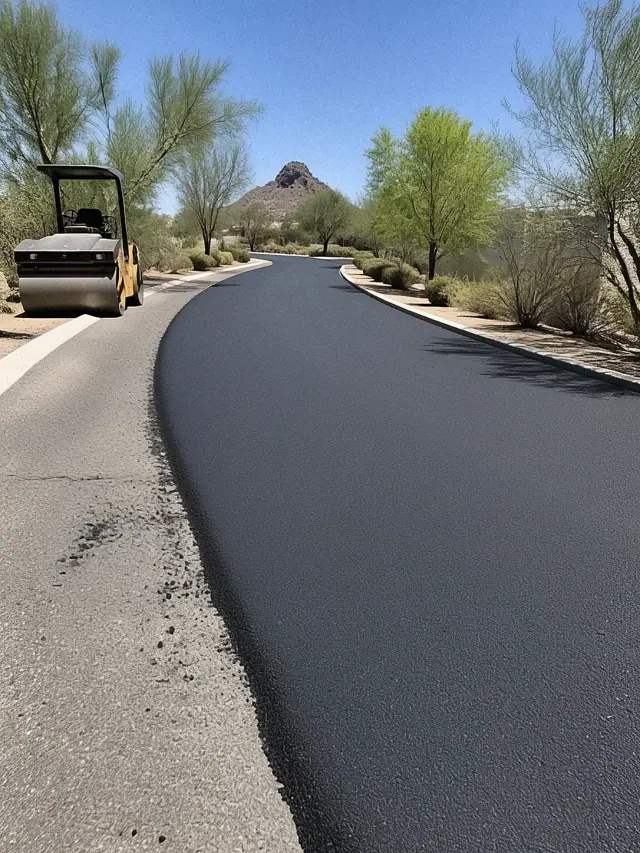
An overlay adds a new wearing course to pavement that still has a sound base, while resurfacing mills away deteriorated material before new asphalt is placed. Typical overlay or surface-milling depths are 1.5 to 2 inches, but the right approach depends on structural cracking, rutting, drainage, and base condition.
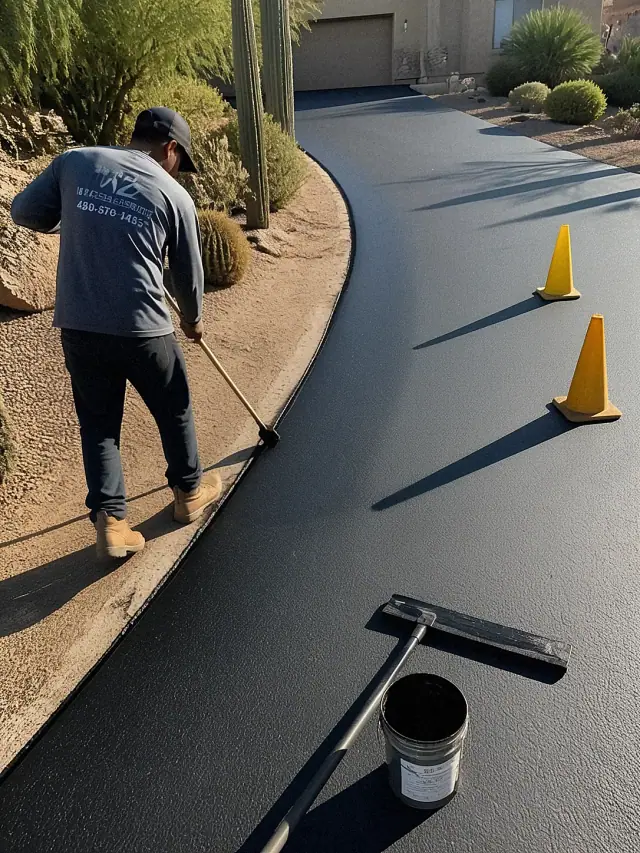
Sealcoating shields asphalt binder from UV exposure, fuel and oil spills, and water infiltration while restoring a darker, more uniform appearance. New asphalt should generally cure for about 12 months before its first sealcoat, with reapplication every 3 to 5 years according to traffic, sun exposure, and surface condition.
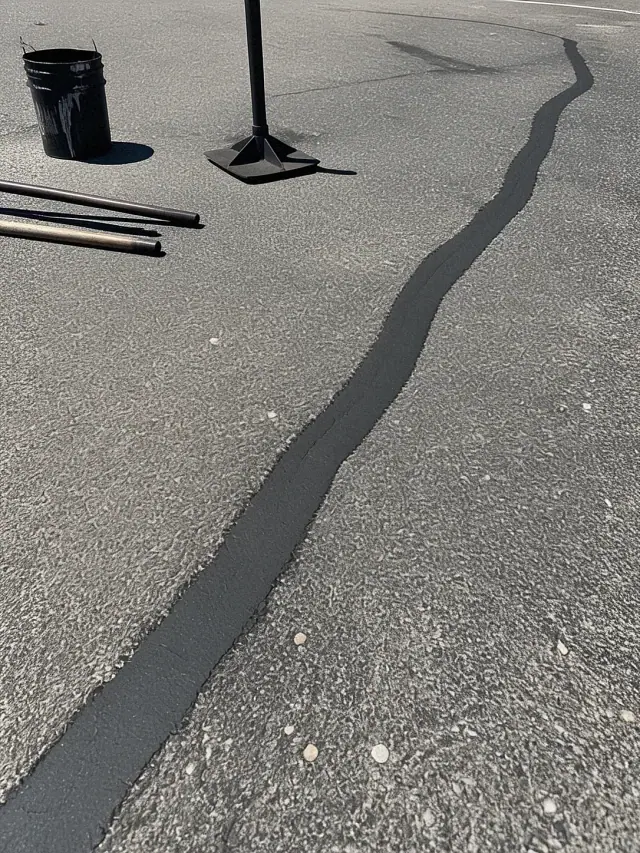
Open cracks let monsoon water reach and erode the base. We evaluate crack geometry and typically route and seal cracks under half an inch wide, while larger or alligatored areas may require saw-cut patching. Early treatment can prevent a hairline crack from becoming a pothole or structural failure within one to two monsoon seasons.
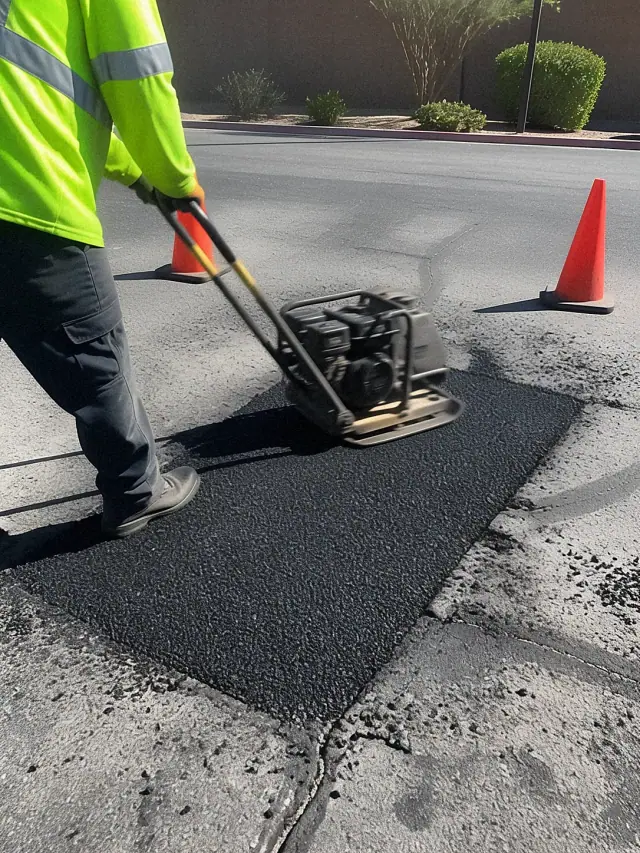
Proper pothole repair means removing failed material instead of simply filling the depression. We mill or saw-cut to clean edges, correct an undermined base when necessary, place hot mix in compacted lifts, and match the surrounding grade for a stronger, smoother repair.
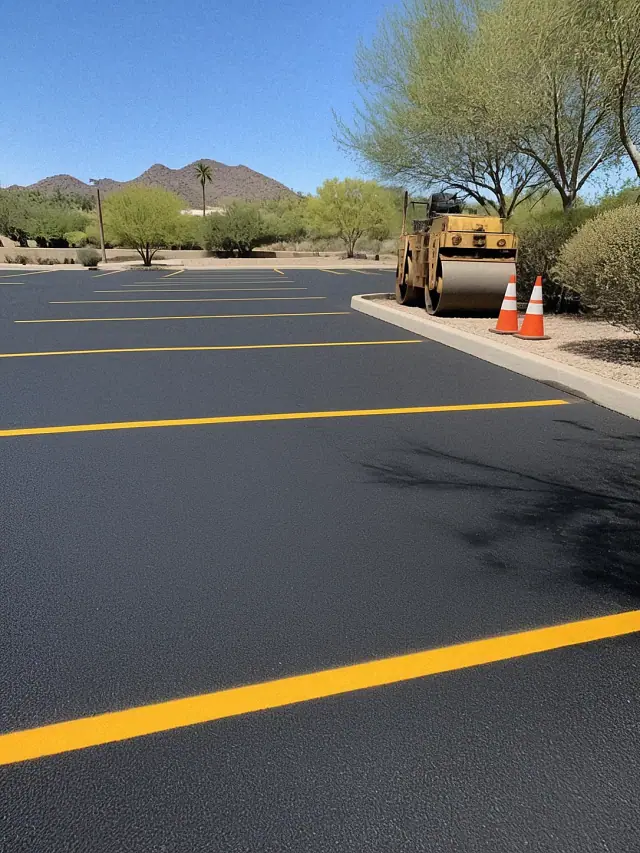
Clear striping supports traffic flow, accessible parking, and safer commercial operations. We lay out ADA-compliant stalls and access aisles, fire lanes, arrows, loading zones, and other required markings, then apply traffic-grade paint with line-striping equipment for consistent edges and film thickness.
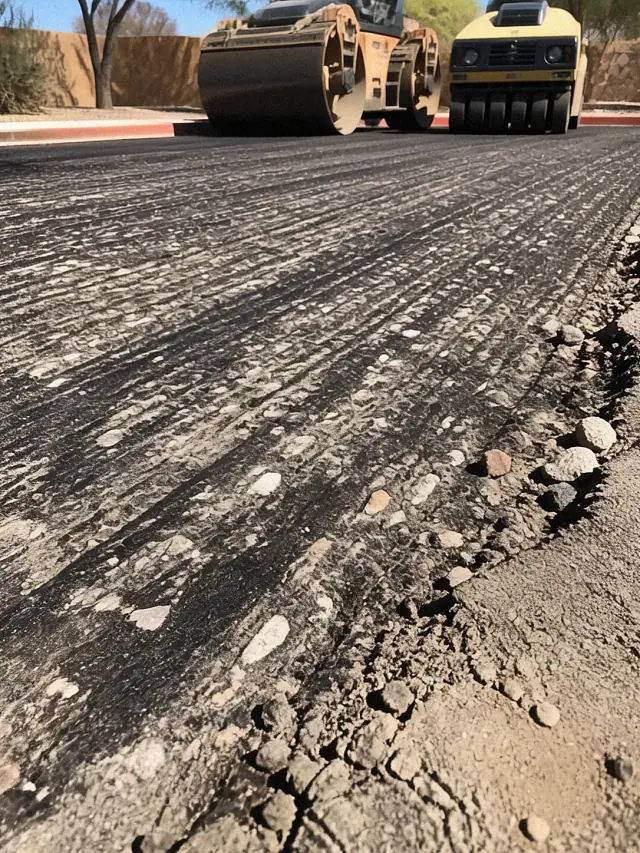
Carbide-tooth cold-planer milling removes deteriorated asphalt to a controlled depth, creates a mechanical bonding profile for new pavement, and can correct cross-slope or grade issues without disturbing a sound base. The reclaimed asphalt pavement can be reused in base applications, and asphalt is recycled at a rate greater than 95% nationally.
The decisions made before paving often determine whether a surface performs for decades or begins failing in under a decade. These solutions address the foundation, material selection, active-site logistics, and preservation planning that matter in Scottsdale's heat, soils, and monsoon conditions.
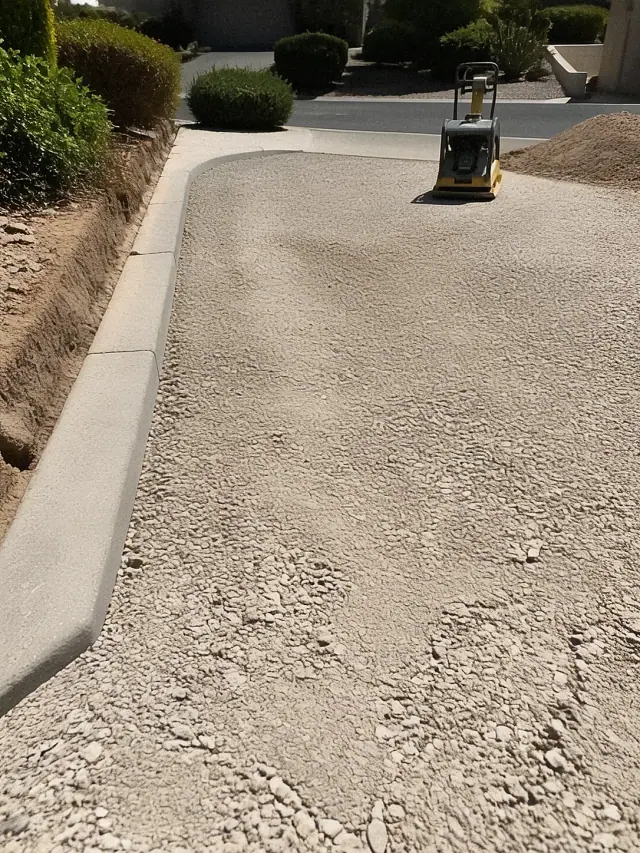
Base failures often begin with inadequate subgrade preparation, poor drainage, or compaction that does not match expected loads. We evaluate site conditions, shape grades to move water, and build a compacted aggregate foundation that supports the pavement above it.
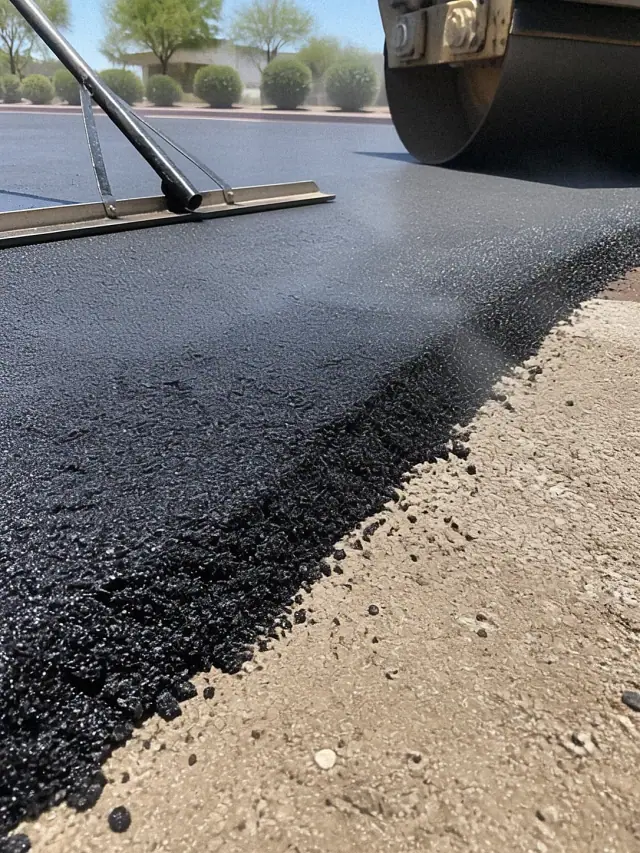
Binder grade, aggregate gradation, and mix stability all affect how pavement responds to sustained desert heat. We select Arizona-appropriate materials for the traffic profile instead of using roadway-sized aggregate or moderate-climate mixes where they do not belong.
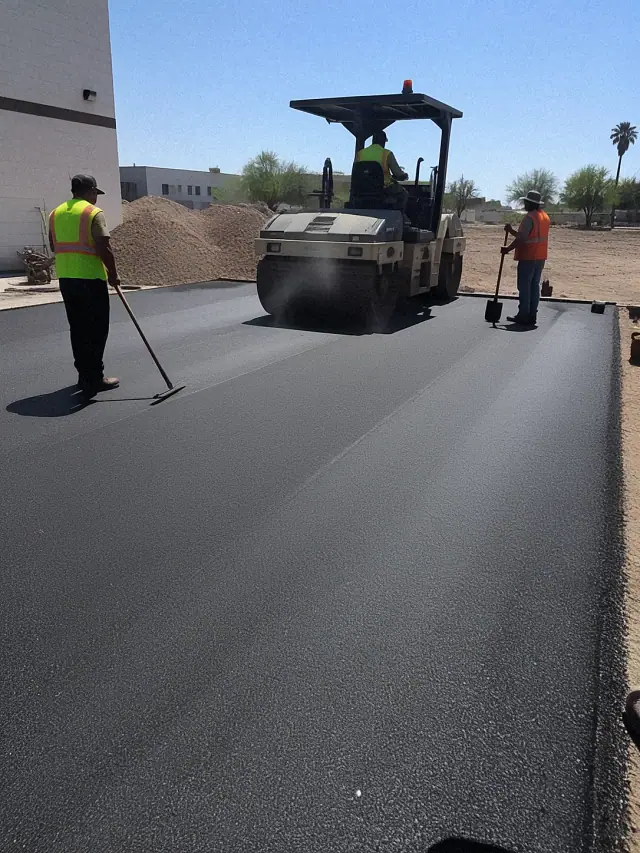
Large parking lots and HOA common areas often need to remain partly accessible while work is underway. We coordinate phased paving, temporary markings, traffic control, and communication so tenants, residents, and customers understand how to move through the property.
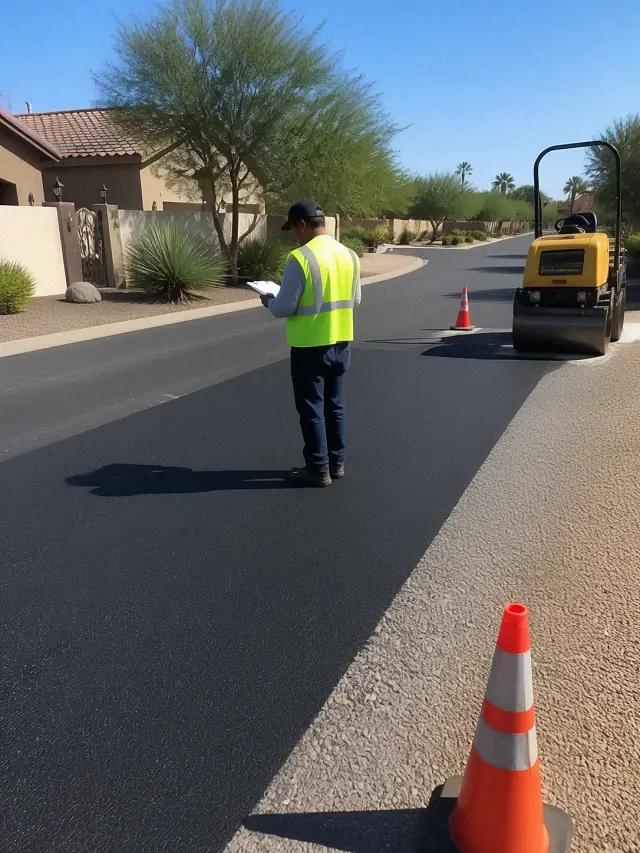
Preventive maintenance is more economical than waiting for widespread structural failure. We build multi-year plans around crack sealing, sealcoating, inspections, and the pavement's traffic and sun exposure, including faster oxidation in North Scottsdale corridors near Pima Road.
Good asphalt work is determined by what happens before, during, and after placement: accurate diagnosis, correct specifications, disciplined installation, and clear follow-through. Scottsdale Asphalt combines local pavement knowledge with licensed, insured operations and straightforward recommendations for residential and commercial properties.
Caliche layers, sandy desert soils, extreme UV exposure, and monsoon runoff all affect how asphalt should be graded, compacted, and maintained. We account for those local conditions and the City of Scottsdale's pavement preservation standards when planning the base, drainage, mix, compaction timing, and maintenance schedule.
Scottsdale Asphalt operates as a licensed Arizona asphalt contractor with general liability and workers' compensation coverage. The company handles residential and commercial construction while maintaining the bonding, insurance, and trade-competency requirements associated with Arizona contractor licensing.
We recommend crack repair, patching, overlay, resurfacing, or replacement according to the pavement's condition instead of defaulting to the most extensive option. Free estimates include clear line-item detail, and project schedules, access plans, site changes, and cleanup expectations are communicated before work begins.
Early pavement symptoms often point to a deeper issue with oxidation, water intrusion, base movement, heat, or drainage. A site assessment can identify which defects are maintainable and which indicate structural failure before a small repair becomes a larger reconstruction project.
Request Free EstimateIntense year-round sun breaks down asphalt binder, turning a black surface gray, brittle, and prone to raveling. Timely sealcoating and maintenance slow that oxidation before loose aggregate and surface cracks spread.
Hairline and linear cracks become pathways for monsoon water to erode the base. Routing and sealing suitable cracks early helps limit widening, edge breakdown, and repeat movement.
Interconnected, scale-like cracking usually signals structural distress rather than a simple surface defect. Limited areas may be saw-cut and patched, while widespread alligator cracking can point to a failed base and the need for resurfacing or replacement.
Potholes form when cracked pavement loses support and traffic breaks the weakened surface apart. A durable repair requires removing compromised asphalt, checking the base, rebuilding support where needed, and compacting new hot mix in lifts.
Sustained summer heat and concentrated turning loads can deform an unsuitable mix or underbuilt pavement. Ruts in drive aisles, entrance aprons, loading zones, and dumpster areas should be evaluated for both surface instability and base weakness.
Ponding after monsoon rain signals a slope, settlement, or drainage problem that can accelerate oxidation and base erosion. Milling, regrading, base correction, or reconstruction may be needed to restore positive drainage.
Every project follows the same decision path: identify the cause of distress, match the scope to the load and site conditions, prepare a stable foundation, and complete the surface with controlled placement and clean details. The exact sequence is adjusted for new paving, repair, resurfacing, maintenance, or striping.
We review cracking, rutting, potholes, oxidation, drainage, edges, transitions, traffic patterns, and signs of base movement. For repairs, crack width, depth, and pattern help determine whether sealing, patching, milling, or full-depth work is appropriate.
The recommended plan identifies repair versus replacement, base work, asphalt mix, depth, drainage corrections, phasing, and striping needs. A free line-item estimate explains the proposed materials, labor, and site preparation so the scope is clear before scheduling.
The crew establishes work zones, protects nearby hardscape and landscaping, and removes failed material by saw-cutting or cold-planer milling where needed. Commercial projects may use phased closures and temporary traffic control to keep portions of the property accessible.
We correct drainage grades, address soft or undermined areas, place aggregate base as required, and compact the foundation for the expected load. Proper base preparation limits movement that would otherwise transfer into cracks, settlement, and rutting at the surface.
Hot mix typically arrives between 275°F and 325°F and must be placed and compacted before it falls below its workable range. The crew controls placement, lift thickness, roller passes, joints, and transitions to achieve a dense, stable pavement surface.
Edges, garage aprons, access points, and tie-ins are finished for a smooth profile and positive drainage. When included, traffic markings are laid out and applied after the surface is ready, and debris, milled material, and tack-coat overspray are removed before completion.
Scottsdale Asphalt serves asphalt paving, repair, sealcoating, resurfacing, milling, striping, and driveway projects across Scottsdale and the greater Phoenix metro area. We plan each scope around the pavement condition, property type, drainage, traffic load, access needs, and desert heat exposure common across Maricopa County communities.
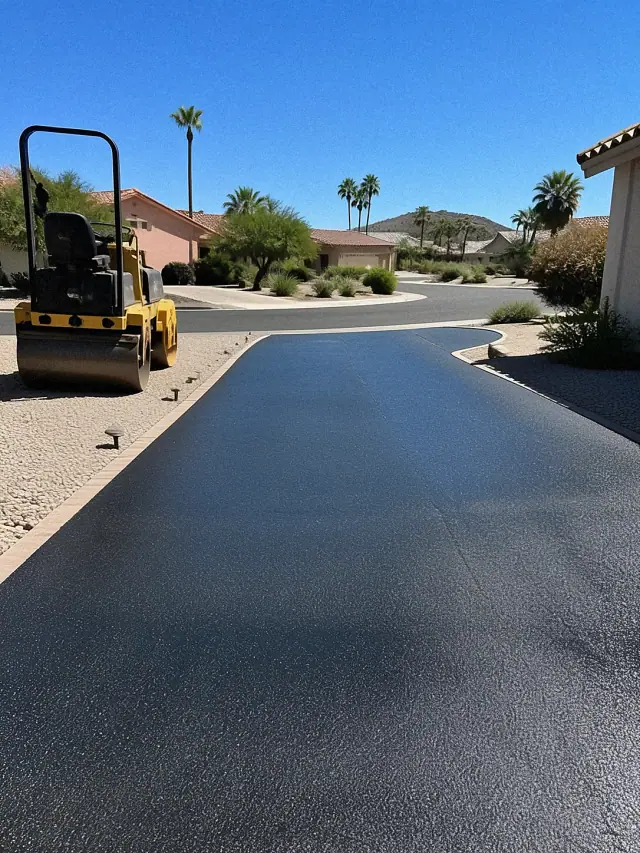
Describe the pavement condition, property type, and service you are considering, and Scottsdale Asphalt will evaluate the next step. Request a free estimate for new paving, repair, resurfacing, sealcoating, milling, or striping, or call to discuss access, phasing, and scheduling.
These answers cover the installation, repair, maintenance, and commercial-planning questions Scottsdale property owners commonly ask. Recommendations still depend on the pavement's structure, traffic load, drainage, and current condition.
Call Scottsdale AsphaltYes, but not immediately. New asphalt needs time for oils to cure and off-gas, so the first sealcoat is generally recommended about 12 months after installation. After that, reapplication every 3 to 5 years can help protect the binder from UV oxidation, spills, and water, depending on traffic and surface condition.
With proper installation and maintenance, asphalt pavement averages about 25 years. Low-traffic residential surfaces may last 20 to 30 years, while high-traffic commercial lots often need resurfacing after roughly 15 to 20 years. UV exposure, base quality, drainage, crack sealing, and sealcoating all influence the actual service life.
An overlay places a new 1.5- to 2-inch wearing course over a structurally sound existing surface. Resurfacing first mills away deteriorated material, corrects grade or localized base issues, and then places new asphalt. Widespread alligator cracking, rutting, or base movement usually calls for more than a simple overlay.
Asphalt paving cost depends on project size, mobilization, base work, removal, drainage corrections, mix quantity, and current material pricing. Paving-mixture producer prices rose 29.8% in 2025 before easing slightly, so current quotes matter. Scottsdale Asphalt provides free line-item estimates rather than a one-size-fits-all square-foot price.
Surface oxidation, isolated cracks, and limited potholes can often be handled with maintenance, patching, or resurfacing when the base remains sound. When alligator cracking affects more than 25 to 30 percent of the area, or rutting, heaving, and widespread structural cracks show base failure, removal and replacement may be the better long-term choice. A site inspection is needed to confirm the scope.
Poor base preparation and deferred maintenance are the leading causes described for premature Arizona pavement failure. Scottsdale's heat and UV exposure make binder brittle, while monsoon water enters cracks and erodes support below the surface. Incorrect drainage, inadequate compaction, and a mix unsuited to sustained heat can accelerate the damage.
Yes. Scottsdale Asphalt works on HOA communities, retail centers, office buildings, medical facilities, and industrial properties. Larger projects can be phased, with advance access planning, temporary traffic control, ADA-compliant layouts, and communication for residents, tenants, or customers.
Installation begins with grading, drainage planning, and base preparation, followed by hot-mix placement and steel-drum compaction. Hot mix arrives between 275°F and 325°F, leaving a limited window to place and roll it before it cools. Joint construction, edges, transitions, and final density are controlled because weak details become common entry points for water.
Routing and sealing is typically appropriate for cracks under half an inch wide when the surrounding pavement is still stable. Larger cracks, alligator patterns, or movement caused by base failure may need saw-cut patching, milling, or reconstruction. Crack width, depth, pattern, and cause should be evaluated before treatment.
A lasting pothole repair starts by milling or saw-cutting the damaged area to clean, straight edges. Failed asphalt is removed, the base is corrected if it has been undermined, and hot mix is placed in compacted lifts. The repair is finished to match the surrounding grade rather than leaving a raised or sunken patch.
Year-round UV exposure oxidizes asphalt binder, causing the surface to fade from black to gray, become brittle, and begin raveling. A properly timed coal-tar or asphalt-emulsion sealcoat forms a barrier against sunlight, water, fuel, and oil. It is preventive maintenance, not a structural fix for failed base or widespread cracking.
Yes. Removed material is called reclaimed asphalt pavement and can be incorporated into new base layers or other asphalt applications. Asphalt is recycled at a rate greater than 95%, making milling a practical way to remove deteriorated surface material while recovering usable material.
Commercial lots may require ADA-accessible stalls and access aisles, fire lanes, directional arrows, loading zones, handicap symbols, and organized stall lines. Scottsdale Asphalt uses traffic-grade paint and line-striping equipment for consistent edges and film thickness. Layout planning also helps improve circulation and usable stall count.
Yes. Large parking lots and HOA common areas can be divided into work zones so portions remain available during construction. Phasing may include temporary markings, traffic control, tenant or resident notices, and carefully sequenced paving and striping. The plan depends on site layout and operational needs.