Proudly serving Scottsdale, Mesa, Tempe, Phoenix, Chandler, Gilbert & surrounding areasCall or Text 24/7: 602-905-5399
Aerial view of a paved asphalt parking lot at an office complex in Scottsdale, AZ with desert mountains in the distance.

Asphalt Paving in Mesa, AZ: Driveway Installation and Parking Lot Repair

Scottsdale Asphalt provides asphalt paving in Mesa, Arizona for homeowners, property managers, commercial sites, industrial facilities, and municipal-style private roads. Our crews handle asphalt paving, driveway installation and replacement, parking lot paving, asphalt repair, resurfacing overlays, sealcoating, crack sealing, pothole repair, parking lot striping, and asphalt milling removal. We work across Mesa's neighborhoods and corridors, from Power Road and Dobson Road to Eastmark, Red Mountain, Riverview, Fiesta District, Las Sendas, and Dobson Ranch. Every project is built around proper surface preparation, drainage, compaction, and a clean finish so the pavement is ready for Mesa's demanding desert climate.

Mesa pavement has to survive Maricopa County heat, monsoon runoff, high UV exposure, and traffic ranging from family vehicles to delivery trucks. Summer pavement surface temperatures regularly exceed 150°F, so binder selection, base stability, and compaction timing matter from the first day. We assess the existing surface, subgrade, drainage, and intended traffic before recommending repair, overlay, milling, sealcoating, or full reconstruction. You get transparent pricing before work starts, practical scheduling guidance, and asphalt work completed by crews familiar with East Valley conditions.

If you need a free asphalt paving estimate in Mesa, contact us for a site review and clear scope. We serve residential, commercial, industrial, HOA, access-road, and larger Maricopa County projects with recommendations matched to the condition of the pavement.

★ ★ ★ ★ ★5/5 Customer Rating - 26 Years in the Asphalt Trade - Thousands of Paving Jobs Completed - Licensed, Bonded & Insured - Homes, Businesses & Commercial Sites
Asphalt Services

Asphalt Paving Services in Mesa, Arizona

Scottsdale Asphalt organizes its Mesa work around the services property owners request most: asphalt paving, driveway installation replacement, parking lot paving, asphalt repair, asphalt resurfacing overlay, asphalt sealcoating, crack sealing, pothole repair, parking lot striping, and asphalt milling removal. We match each service to the condition of the surface: stable base work for new pavement, overlays for structurally sound asphalt, sealcoating and crack work for preservation, and milling or removal when the surface needs deeper rehabilitation. Our East Valley service area also includes nearby Tempe , Chandler, Gilbert, Apache Junction, Queen Creek, Scottsdale, and Salt River Pima-Maricopa Indian Community boundary areas.

Commercial Commercial Asphalt Paving

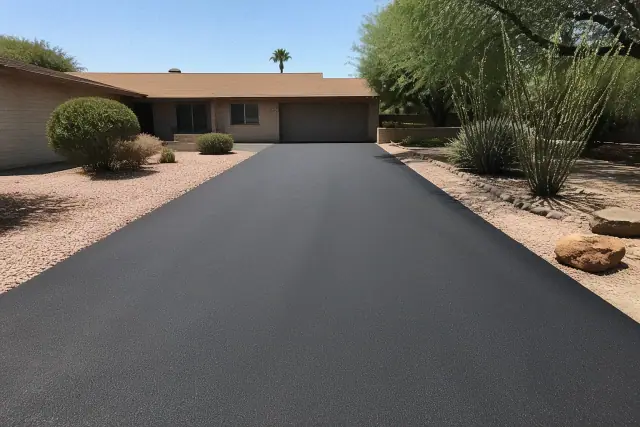
Freshly paved asphalt driveway leading to a ranch-style house in Mesa, AZ.

Asphalt paving in Mesa covers new paved surfaces for homes, retail centers, office parks, industrial facilities, HOA streets, private lanes, and access roads. Our crews evaluate subgrade stability, drainage patterns, expected traffic, and base course requirements before placing hot mix asphalt. Proper grading, compaction, and mat temperature control help the finished surface hold up under East Valley heat and daily use.

Explore Service

Driveway Installation & Replacement

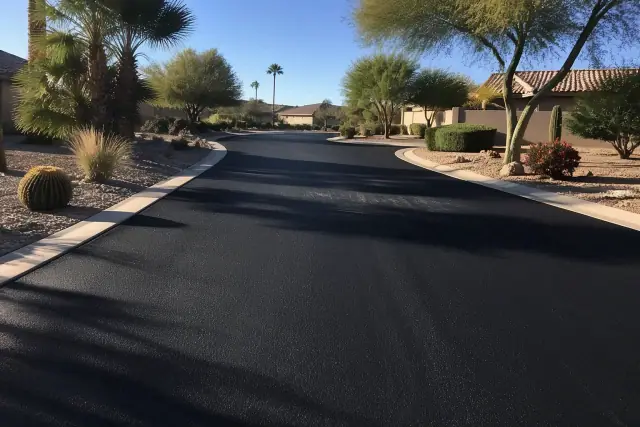
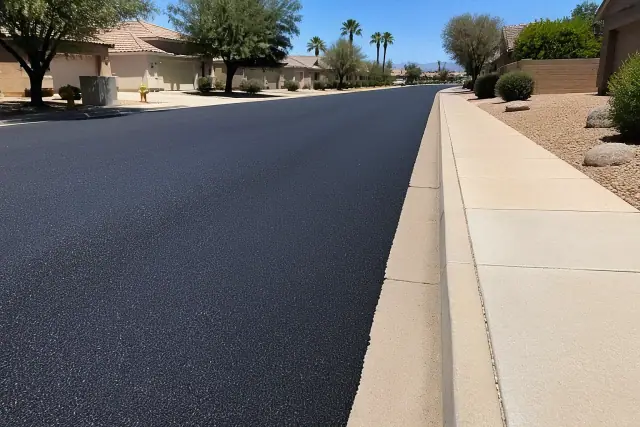
Freshly paved asphalt driveway at a residential home in Mesa, AZ.

Driveway installation and replacement starts with removal of weak material, grading for runoff, and compaction of a stable aggregate base before the surface course is placed. Mesa driveways paved over soft or poorly compacted base can fail even when the asphalt mix is good. Our driveway work focuses on base stability, clean edges, and water movement away from garages, entries, and low spots.

Explore Service

Parking Lot Paving

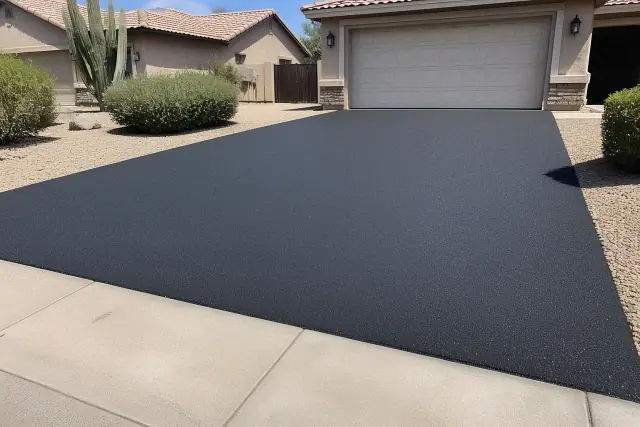
Freshly paved asphalt driveway at a residential home in Mesa, AZ.

Parking lot paving in Mesa requires more than a smooth black surface. We account for ADA-accessible stalls, fire lane markings, traffic flow, loading zones, and the 1.5% to 2% cross-slope commonly used to move water off paved areas. The result is a parking surface designed for daily use by customers, tenants, service vehicles, and delivery traffic.

Explore Service

Asphalt Repair

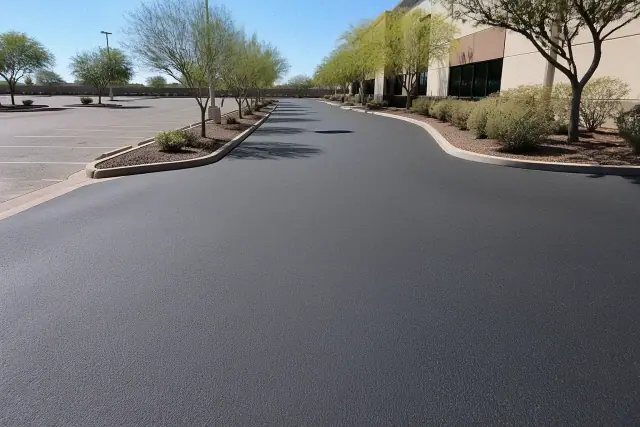
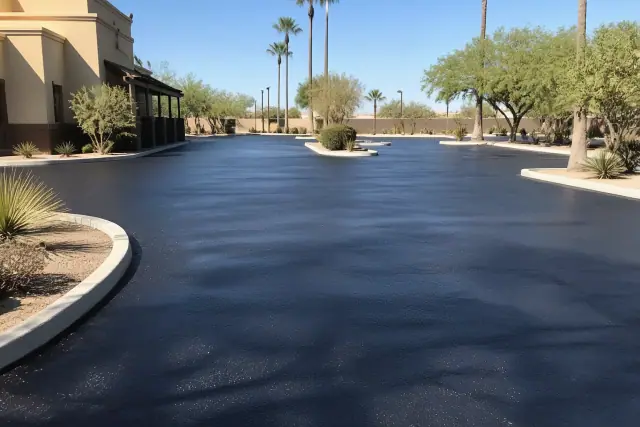
Newly paved asphalt drive aisle at an office complex in Mesa, AZ, showing smooth surfaces and concrete curbing.

Asphalt repair is the right starting point when cracks, failed edges, surface raveling, soft spots, or localized pavement failures have not yet required full replacement. We evaluate whether the distress is limited to the surface or tied to base and subgrade problems. When repair is appropriate, crews cut failed areas cleanly, recompact the base, and place new hot mix asphalt so the patched area sits flush with the surrounding pavement.

Asphalt Resurfacing & Overlay

Newly sealed asphalt cracks in a large commercial parking lot in Mesa, AZ.

Asphalt resurfacing overlay places a new lift of hot mix asphalt over structurally sound existing pavement. It works best when the lower pavement layers and base are intact but the surface has oxidation, minor cracking, or wear. We avoid overlaying failed base areas without repair because the same cracking pattern can return through the new surface.

Asphalt Sealcoating

Freshly sealcoated black asphalt parking lot behind a restaurant in Mesa, AZ.

Asphalt sealcoating adds a protective emulsion layer over existing pavement to slow UV oxidation, resist fuel exposure, and reduce water infiltration through the surface. In Mesa's climate, unsealed asphalt can turn gray and brittle faster because heat and sun break down the binder. We check surface conditions, temperatures, and humidity before application so the sealcoat can cure correctly.

Crack Sealing

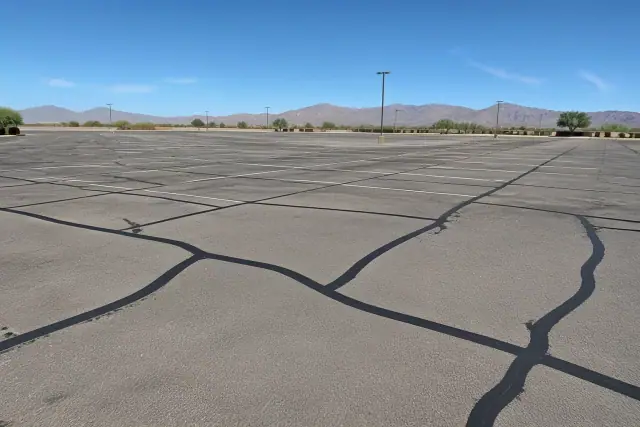
Newly sealed asphalt cracks in a large commercial parking lot in Mesa, AZ.

Crack sealing helps stop water from reaching the base course before small openings widen into larger pavement failures. When appropriate, we route and fill cracks with hot-pour rubberized sealant so the pavement can keep flexing through Arizona's temperature swings. Early crack sealing is usually far less costly than waiting for moisture, traffic, and heat to turn cracks into potholes or base failure.

Pothole Repair

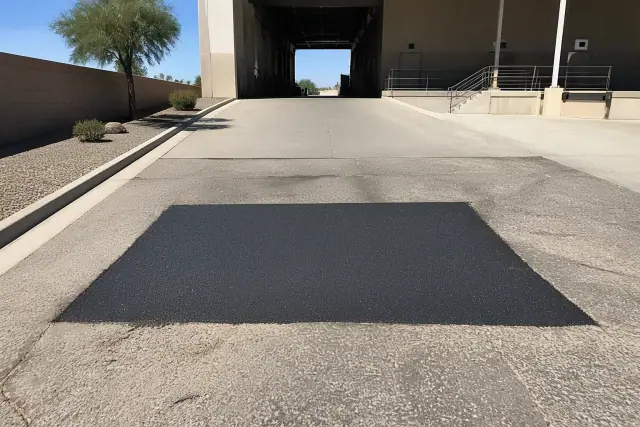
Freshly paved asphalt patch on a warehouse loading drive in Mesa, AZ.

Pothole repair starts by removing loose and deteriorated asphalt, checking the base beneath the failed area, and rebuilding the patch with properly compacted material. A saw-cut hot mix patch is designed to bond cleanly and carry traffic. Cold patch may be useful as a temporary stopgap, but it is not our permanent repair method because it can fail within one to two freeze-thaw cycles or under heavy traffic.

Parking Lot Striping

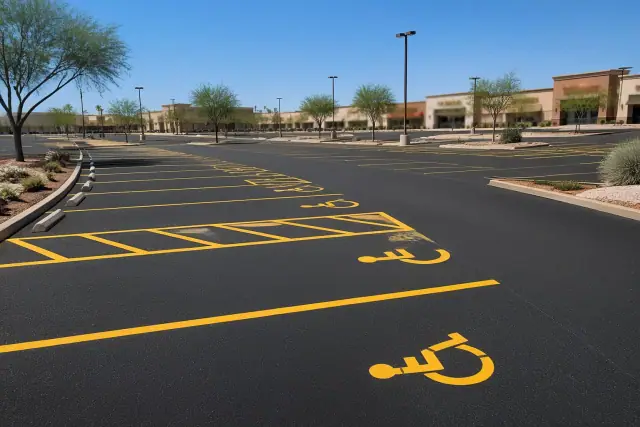
Freshly paved parking lot with bright yellow striping and handicap markings in Mesa, AZ.

Parking lot striping completes a paved surface with stall lines, directional arrows, fire lanes, crosswalks, speed bumps, and accessible parking symbols. We use traffic-grade striping materials selected for visibility under Mesa's intense UV exposure. Clear layout and markings help organize customer flow, service vehicle access, accessible parking, and fire lane clearance.

Asphalt Milling & Removal

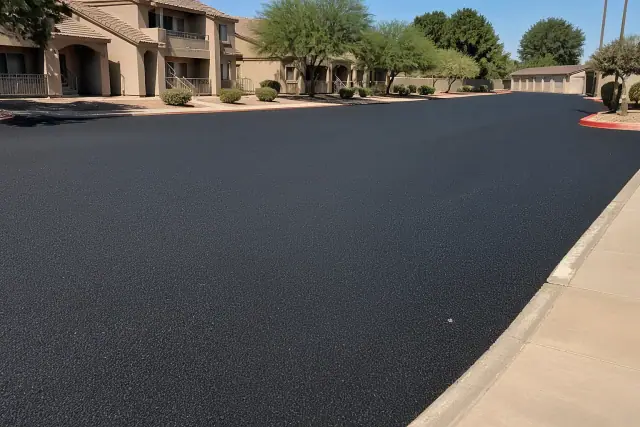
Newly paved asphalt parking lot at an apartment complex in Mesa, AZ, under bright sunlight.

Asphalt milling removal is used when the worn surface needs to come off before a new overlay or when failed pavement must be removed completely. Milling can remove a controlled surface depth, often 1.5 to 2 inches, and create a textured profile for the next lift of asphalt to bond to. Full removal breaks out failed pavement, protects adjacent surfaces, and allows reclaimed asphalt pavement to be handled for recycling when the project scope allows.

Pavement Planning

How to Choose the Right Asphalt Solution in Mesa

Choosing the right asphalt solution in Mesa starts with the condition of the existing pavement, the strength of the base, and the way water moves across the site. A surface with oxidation and hairline cracking may only need preservation, while alligator cracking, depressions, and rutting usually point to base or subgrade issues. We explain the practical difference between maintenance, overlay, partial repair, and full reconstruction before recommending a scope.

Match the Treatment to Pavement Condition

Surface oxidation and hairline cracks can often be handled with sealcoat and crack fill, while minor surface cracking or rutting may call for mill and overlay. When structural cracking or base failure appears, full reconstruction or targeted base repair is usually the better long-term choice. Matching the treatment correctly helps avoid paying for replacement when resurfacing is enough or overlaying a pavement section that will fail quickly.

Verify Base Depth and Compaction

Base work is the foundation of every Mesa asphalt project. Standard driveways are typically built over 4 to 6 inches of compacted aggregate base, while commercial and industrial areas commonly need 6 to 8 inches or more depending on traffic loads. We grade and compact base material before paving because soft spots, rutting, and alligator cracking usually begin below the surface.

Plan Drainage Before Paving

Water damages asphalt even in an arid city because monsoon storms can leave heavy runoff on flat or poorly drained surfaces. We set grades and finish elevations to move water toward streets, swales, drains, or catch basins instead of letting it pond. Correcting drainage before asphalt placement is far more efficient than trying to fix low spots after the mat is installed.

Use Asphalt Mixes Built for Arizona Heat

Mesa's heat can soften asphalt binder under heavy loads if the mix design is not appropriate for high-temperature performance. For Arizona projects, performance-grade binders such as PG 76-16 or PG 70-10 are used to resist rutting while maintaining flexibility in cooler months. We also use aggregate gradations that meet MAG specifications and source material from plants operating under quality-control programs aligned with National Asphalt Pavement Association standards.

Know When Preservation Is Enough

Sealcoating, crack filling, and localized patching can extend pavement life when the base is still sound. Sealcoat plus crack fill can add 5 to 7 years, while a mill and overlay can add 10 to 15 years when conditions are right. Our recommendations focus on the pavement's actual distress type, extent, and severity rather than a one-size-fits-all repair.

Confirm Access, Permits, and Timing

Project scope can affect whether City of Mesa Development Services, Maricopa County Public Works, or right-of-way requirements apply. We identify permit considerations during estimating when paving changes drainage, ties into public areas, or is connected to a larger building project. We also discuss access timing so homeowners, tenants, customers, and delivery vehicles know what to expect during and after paving.

Mesa Asphalt Issues

Common Asphalt Problems for Mesa Properties

Mesa asphalt surfaces fail in predictable ways when heat, UV exposure, traffic loads, drainage problems, or weak base material are ignored. Surface symptoms such as gray oxidation, cracks, potholes, rutting, ponding water, and faded markings often point to different underlying causes. Our site evaluation separates cosmetic wear from structural failure so you can choose the right repair before small problems spread.

Request Pavement Inspection

UV Oxidation and Brittle Surface

Intense sun breaks down asphalt binder, leaving the surface gray, brittle, and more likely to ravel or crack. Sealcoating every 3 to 5 years is one practical preservation step for Mesa surfaces that are still structurally sound.

Cracks From Temperature Flexing

Arizona temperature swings make asphalt flex, and that movement can open cracks over time. Routing and sealing cracks early helps block water from reaching the base course and turning a surface crack into a structural repair.

Standing Water and Poor Drainage

Ponding water weakens pavement by seeping through joints, cracks, and unsealed edges into the base and subgrade. Correct slope, inlets, and runoff paths are especially important during monsoon storms, when short-duration rainfall can overwhelm flat paved areas.

Potholes and Base Failures

Potholes often start when water infiltrates a crack, weakens the base, and traffic breaks the unsupported surface apart. A lasting repair requires cutting out the failed area, recompacting the base, and installing hot mix asphalt rather than only filling the hole.

Rutting Under Truck Loads

Delivery trucks, trash trucks, and industrial traffic can deform asphalt that was not designed for the load or was compacted poorly. We evaluate traffic use and pavement structure so heavy-use areas receive the right base depth, mix design, and repair approach.

Faded Striping and ADA Layout Issues

Mesa's UV exposure can reduce the visibility of parking lot markings, directional arrows, accessible stalls, and fire lanes. Fresh striping improves circulation and helps property managers keep parking layouts clear for customers, tenants, and emergency access.

Why Choose Us

Why Choose Scottsdale Asphalt in Mesa?

Scottsdale Asphalt combines local pavement knowledge with practical recommendations for repair, resurfacing, preservation, and full installation. We understand how East Valley soils, extreme heat, traffic patterns, and drainage affect asphalt performance, and we build scopes around those conditions. Our crews emphasize clear estimates, organized job sites, and durable work from initial surface prep through final cleanup.

Local East Valley Pavement Knowledge

We serve Mesa's 141-square-mile footprint, including Eastmark, Dobson Ranch, Red Mountain, Riverview, Fiesta District, Las Sendas, and major corridors such as US-60 and Loop 202. That local familiarity helps us plan access, drainage, staging, and pavement structure for the way Mesa properties are actually used.

Honest Repair vs. Replacement Guidance

Not every worn asphalt surface needs replacement. We explain when sealcoating, crack fill, patching, milling, overlay, or reconstruction makes sense and put the condition assessment in writing before work begins.

Clean Job Sites and Reliable Scheduling

We coordinate schedule, access, and cleanup so paving work is easier on homeowners, tenants, customers, and property managers. On larger commercial and municipal-style projects, we can phase work around business needs and provide clear instructions before the surface reopens.

Simple Process

Our Asphalt Paving Process in Mesa

A durable pavement project follows a defined sequence rather than rushing straight to the surface course. We begin with evaluation and scope, prepare or remove failed material, build and compact the base, place hot mix asphalt, roll to the required finish, and complete cleanup with use instructions. Each step is designed to prevent the shortcuts that cause early cracking, soft spots, and drainage failure.

01.

Site Evaluation & Written Scope

We review existing pavement condition, subgrade type, drainage patterns, edge restraints, traffic use, and access needs. From that review, we provide a clear scope and pricing before work starts so you know what is included.

02.

Demolition, Milling, or Removal

When replacement or resurfacing is needed, we cut edges cleanly, remove failed material, or mill the worn surface to the planned depth. Milled reclaimed asphalt pavement can be stockpiled for recycling when the project allows.

03.

Grading & Base Compaction

Aggregate base is placed and compacted in lifts so the pavement has stable support below the asphalt. Soft spots are corrected before paving because structural failures usually begin in the base or subgrade.

04.

Hot Mix Placement

Hot mix asphalt is delivered and placed while it remains workable, then shaped by paving equipment or hand work in tight areas. Larger areas are paved with a machine, while confined edges and repairs are finished carefully by the crew.

05.

Rolling & Finish Density

Compaction begins immediately with rolling patterns suited to the size and type of work. Final passes create the specified density and surface finish, and larger commercial or municipal-style projects may include density gauge checks when required.

06.

Cleanup & Reopening Guidance

After final rolling, we clean the work area and review use restrictions. Foot traffic can often resume within a few hours, while vehicle traffic is typically held for about 24 hours when ambient temperatures are below 90°F; in Mesa summer heat, heavy vehicles may need longer.

Result Examples

Asphalt Outcomes for Mesa Properties & Businesses

Case Study 1: For a residential driveway or private lane, the right outcome starts with a stable base, controlled drainage, clean tie-ins, and a smooth hot mix surface that can handle daily vehicle use. This is especially important in established Mesa neighborhoods where older pavement often fails at edges, low spots, and garage transitions.

Case Study 2: For a retail or office parking lot, an overlay, patching plan, or full repave can be coordinated with striping and ADA layout needs so customers can navigate the property clearly. Phasing work around access points helps keep disruption manageable while the new surface cures.

Case Study 3: For industrial yards, HOA roads, and access roads near Mesa's growth corridors, pavement structure matters as much as appearance. We consider truck loads, drainage, milling depth, base stability, and long-term maintenance before recommending resurfacing or reconstruction.

Get Better Asphalt

Schedule a Mesa
Asphalt
Consultation

Whether you need a driveway, parking lot, overlay, patch repair, sealcoating, striping, or a larger pavement plan, Scottsdale Asphalt can inspect the site and recommend the right next step. Request an estimate for asphalt paving in Mesa and get a clear scope based on the condition of your surface, base, drainage, and traffic needs.

Mesa Asphalt Help

FAQs About Asphalt Paving in Mesa, AZ

These answers cover common questions about asphalt paving, overlays, repairs, maintenance, permits, drainage, and service timing for Mesa properties. For a site-specific recommendation, Scottsdale Asphalt can review your pavement condition and explain the best option before work begins.

Call Our Asphalt Experts

Ask for proof of current Arizona Registrar of Contractors licensing and general liability insurance, then confirm who handles permits and inspections. Also ask about base course depth, performance-grade binder, compaction method, warranty terms, and what conditions are excluded. A contractor who cannot explain those basics may not be preparing the pavement correctly.

A proper project usually includes site evaluation, subgrade or soft-spot correction, demolition or removal when needed, grading, base compaction, asphalt placement, rolling, and final inspection. Existing pavement that receives an overlay may also need tack coat and milling. Scottsdale Asphalt also includes cleanup and customer guidance before the job is considered complete.

With proper installation and maintenance, asphalt pavement in Mesa has an average service life of approximately 25 years. Low-traffic residential surfaces can reach 20 to 30 years, moderate-traffic arterial roads often last 15 to 20 years, and high-traffic surfaces may need major rehabilitation after 10 to 15 years. Sealcoating every 3 to 5 years and sealing cracks as they develop helps protect that lifespan.

An overlay places a new lift of hot mix asphalt over existing pavement when the base remains structurally sound. Full replacement removes the existing asphalt and base material, rebuilds the section, and installs new pavement from the ground up. Overlay is less disruptive and less costly, but it is not the right choice when alligator cracking, rutting, or base failure is present. For planning purposes, overlay without milling is listed at 8 to 12 years of typical life extension, while full reconstruction is listed at 20 to 25 years when reconstruction is the correct solution.

Mesa's extreme heat and UV exposure accelerate binder oxidation and can make asphalt more vulnerable to rutting under heavy loads. Summer pavement surface temperatures regularly exceed 150°F, so mix design, compaction timing, and maintenance matter. Monsoon runoff also makes crack sealing and drainage important even though Mesa is an arid city.

Permit requirements depend on scope. New paving connected to a building project, work that changes site drainage, or work in the public right-of-way may require City of Mesa Development Services or Maricopa County Public Works review. Many private residential driveway replacements do not require the same level of permitting, but the site should be checked before work begins.

Double chip seal applies liquid asphalt binder, typically CRS-2P emulsified asphalt, aggregate chips, rolling, and a second binder-and-chip course to create an interlocked surface treatment. It is generally used for low-volume roads, rural access roads, and large private properties where full hot mix asphalt is not the desired solution. It is not the best fit for heavily loaded commercial parking lots or high-traffic truck areas.

Foot traffic can often return within a few hours after final rolling, but vehicle traffic is typically held for about 24 hours when ambient temperatures are below 90°F. In Mesa's summer heat, it can be wise to wait the full 24 hours or longer before heavy vehicle use. We provide project-specific reopening guidance because surface thickness, shade, heat, and vehicle weight all affect curing.

Base depth depends on soil conditions and traffic loads. Standard Mesa driveways are often built over 4 to 6 inches of compacted aggregate base, while commercial and industrial applications commonly need 6 to 8 inches or more. Heavy truck areas may require an engineered pavement section rather than a generic base depth.

Milling is useful when the surface course is oxidized, rutted, or too high to accept another lift without creating drainage, curb, or transition problems. It commonly removes about 1.5 to 2 inches of worn asphalt and creates a textured surface for the new overlay. A simple overlay can work when elevations are acceptable and the existing pavement structure is sound.

Overlay thickness depends on pavement condition and intended traffic, but a minimum of 1.5 inches of compacted hot mix is needed to provide meaningful structural contribution. Many mill-and-overlay projects remove and replace roughly 1.5 to 2 inches of surface course. The base still needs to be sound because overlay thickness cannot fix structural failure below.

Potholes usually develop after cracks or failed patches allow water into the base and traffic breaks the unsupported surface apart. Poor drainage, weak base material, and delayed crack sealing can all accelerate the problem. A lasting repair should remove failed material, recompact the base, and install hot mix asphalt flush with the surrounding pavement.

Sealcoating is useful when asphalt is still structurally sound and the goal is to slow UV oxidation, reduce water infiltration, and refresh the surface. For Mesa's climate, sealcoating every 3 to 5 years is often recommended when the pavement is otherwise sound. Sealcoat is not a structural repair, so deep cracks, potholes, and base failures need separate repair before coating.

Scottsdale Asphalt provides residential driveway paving, commercial parking lot paving, industrial asphalt paving, municipal asphalt paving, asphalt overlay, milling, removal, double chip seal, sealcoating, crack seal, pothole repair, patch repair, striping, marking, and hot mix asphalt installation. Services are matched to the pavement condition, traffic use, drainage, and budget. A site review helps decide whether maintenance, resurfacing, or reconstruction is the right path.

We serve Mesa's full footprint, including Eastmark, Dobson Ranch, Red Mountain, Riverview, Fiesta District, Las Sendas, and properties near corridors such as US-60, Loop 202, Ellsworth Road, Power Road, Dobson Road, and Phoenix-Mesa Gateway Airport. The service area also includes nearby Chandler, Gilbert, Queen Creek, Apache Junction, Scottsdale, and Salt River Pima-Maricopa Indian Community boundary areas. For larger commercial and municipal-style projects, we also cover broader Maricopa County service needs.