Proudly serving Scottsdale, Mesa, Tempe, Phoenix, Chandler, Gilbert & surrounding areasCall or Text 24/7: 602-905-5399
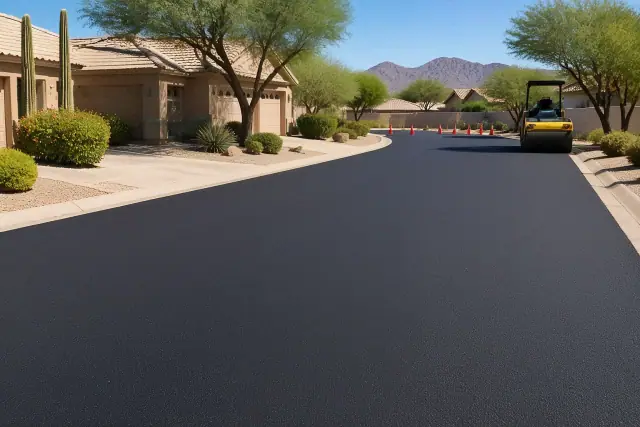
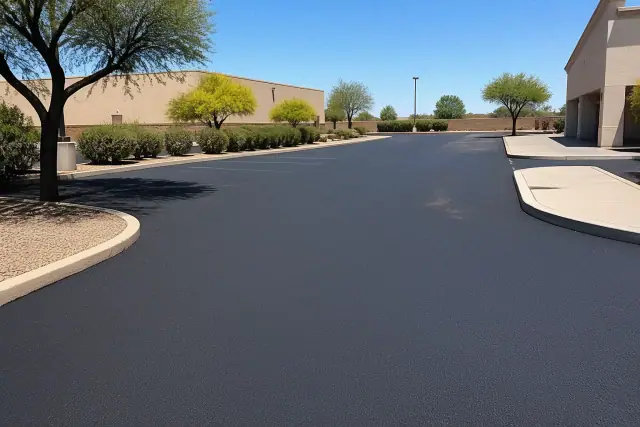
Aerial view of a paved asphalt parking lot at an office complex in Scottsdale, AZ with desert mountains in the distance.

Asphalt Paving in Phoenix, AZ for Driveways and Commercial Lots

Scottsdale Asphalt provides full-service asphalt paving in Phoenix, AZ for residential, commercial, industrial, and municipal properties. Our crews handle asphalt paving, driveway installation replacement, parking lot paving, asphalt repair, asphalt resurfacing overlay, asphalt sealcoating, crack sealing, pothole repair, parking lot striping, and asphalt milling removal. From Arcadia and Ahwatukee to Desert Ridge, Laveen, South Mountain, Camelback East, and Deer Valley, we build pavement around the conditions that define the Salt River Valley.

Phoenix pavement has to survive year-round UV exposure, surface temperatures that regularly exceed 150°F, expansive desert soils, caliche layers, and monsoon runoff that can undermine weak base work. We focus on compaction, drainage, mix selection, and edge support before the finish course goes down so the surface is more than a temporary blacktop layer. If your driveway, parking lot, access road, or paved service area is cracking, raveling, ponding, or rutting, Scottsdale Asphalt can assess the actual cause and recommend the right repair or replacement path.

Phoenix is the fifth-most populous city in the United States and the largest city by area in Arizona at 517.9 square miles, with more than 1.6 million residents and constant pavement demand. Request an estimate to get a scope that covers materials, base condition, drainage, schedule, and cost before work begins.

★ ★ ★ ★ ★5/5 Customer Rating - 26 Years in the Asphalt Trade - Thousands of Paving Jobs Completed - Licensed, Bonded & Insured - Homes, Businesses & Commercial Sites
Asphalt Services

Asphalt Paving Services in Phoenix, AZ

Scottsdale Asphalt covers the full pavement lifecycle in Phoenix, from asphalt paving, driveway installation replacement, and parking lot paving to asphalt repair, resurfacing overlay, sealcoating, crack sealing, pothole repair, striping, and milling removal. Our service mix is built for the Valley's heat, UV exposure, expansive soils, caliche layers, and monsoon drainage problems. We also serve nearby areas when projects extend across the metro, including Chandler and other Maricopa County communities named in our service area.

Commercial Commercial Asphalt Paving

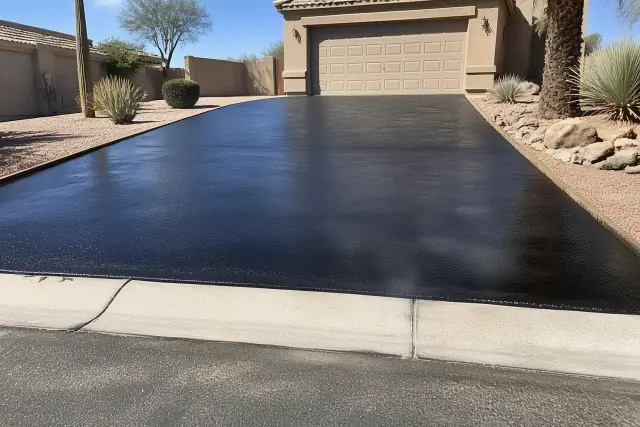
Freshly paved asphalt driveway meeting a street curb on a sunny day in a suburban Phoenix, AZ neighborhood.

Asphalt paving is the foundation service for Phoenix driveways, parking lots, private roads, access lanes, and paved service areas. We plan each project around Arizona heat, existing subgrade conditions, drainage, hot mix placement, and final compaction so the finished pavement is built for local traffic and weather.

Explore Service

Driveway Installation & Replacement

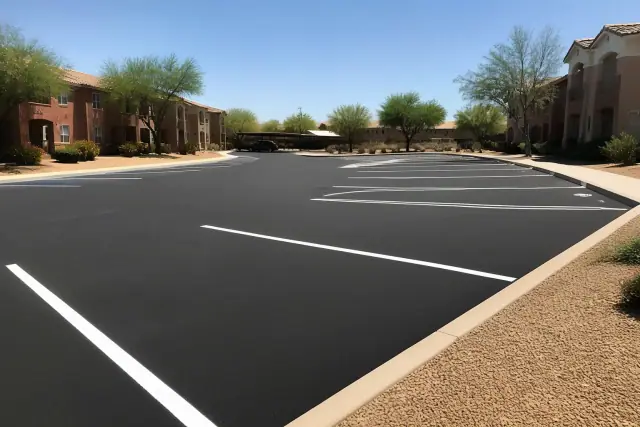
Freshly paved asphalt parking lot with new white parking stripes at an apartment complex in Phoenix, AZ.

Driveway installation replacement in Phoenix starts with removing failed material when needed, shaping the grade, compacting the subgrade, and building a stable aggregate base. The goal is a clean residential asphalt surface that drains properly, resists soft spots, and handles daily vehicle use without early edge failure.

Explore Service

Parking Lot Paving

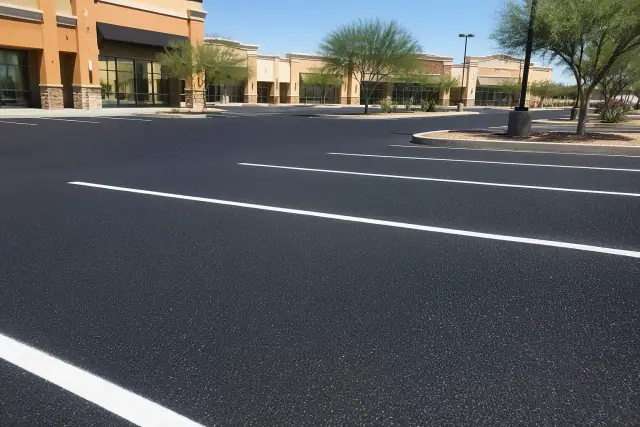
Freshly paved asphalt parking lot with new white parking stripes at an apartment complex in Phoenix, AZ.

Parking lot paving for Phoenix commercial properties needs the right pavement thickness, traffic layout, drainage plan, and base preparation before asphalt is placed. We pave retail centers, office properties, industrial sites, medical campuses, and multi-tenant lots with a focus on durability under turning loads, delivery traffic, and desert heat.

Explore Service

Asphalt Repair

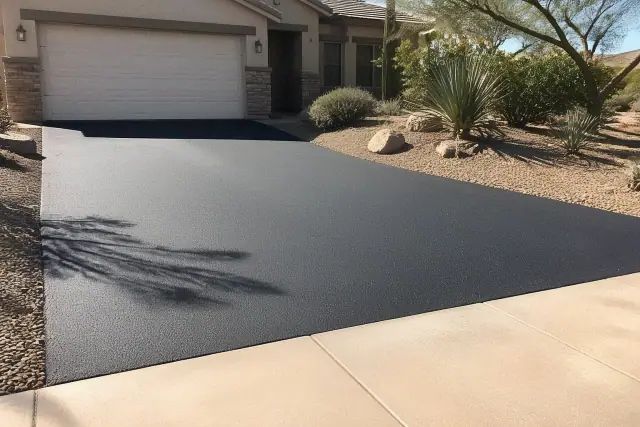
Freshly paved asphalt driveway with clean edges at a home in Phoenix, AZ.

Asphalt repair addresses cracked, settled, raveled, broken, or unsafe pavement before the damage spreads into the base. For Phoenix properties, we look at the cause of the failure first, then recommend the right repair method for the condition instead of covering structural problems with a temporary surface patch.

Asphalt Resurfacing & Overlay

Freshly paved asphalt and crack sealing at a warehouse loading dock in Phoenix, AZ.

Asphalt resurfacing overlay is a practical option when the existing pavement surface is worn, oxidized, lightly cracked, or rough while the base remains structurally sound. We prepare or mill the old surface, apply a bonding tack coat, and install a new asphalt lift to restore function and appearance at a lower cost than full replacement.

Asphalt Sealcoating

Freshly sealcoated asphalt parking lot with bright white painted lines at a retail center in Phoenix, AZ.

Asphalt sealcoating helps protect Phoenix pavement from UV oxidation, moisture intrusion, and surface raveling caused by intense desert sun. When the pavement is a good candidate, we apply a protective sealer after needed repairs so driveways and parking lots keep a darker, cleaner surface and a longer maintenance cycle.

Crack Sealing

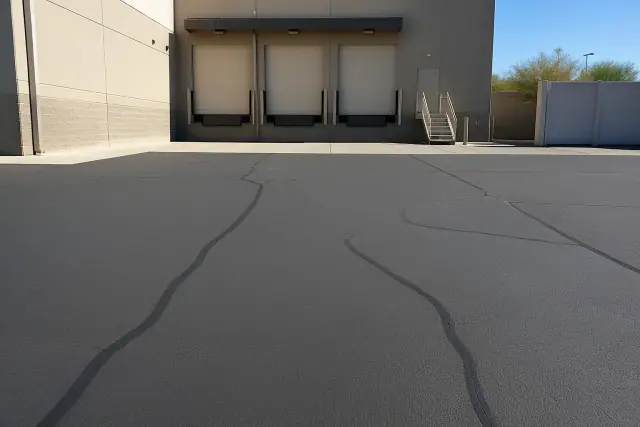
Freshly paved asphalt and crack sealing at a warehouse loading dock in Phoenix, AZ.

Crack sealing helps stop water from entering open pavement joints and weakening the subbase, especially during Phoenix monsoon storms. We clean and fill active cracks with appropriate sealant so the repair can flex with temperature movement and slow the spread of larger pavement failures.

Pothole Repair

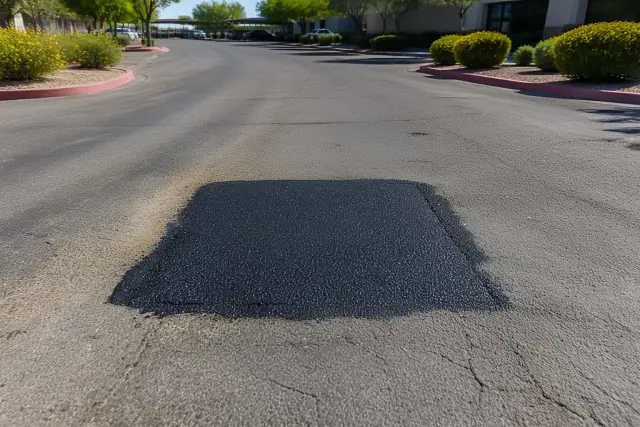
Freshly repaired asphalt pothole in a commercial driveway in Phoenix, AZ.

Pothole repair in Phoenix requires removing loose and unstable asphalt, checking the base condition, and placing new material against firm surrounding pavement. This approach creates a stronger repair than quick fill work and helps reduce recurring holes in drive lanes, parking stalls, and property entrances.

Parking Lot Striping

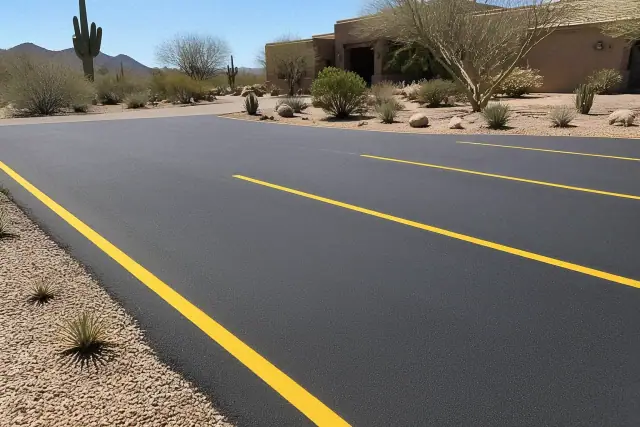
Freshly paved asphalt driveway with yellow parking lines at a desert property in Phoenix, AZ.

Parking lot striping keeps Phoenix commercial pavement organized, easier to navigate, and ready for daily use. We stripe parking stalls, directional arrows, accessible spaces, loading areas, and fire lane markings with layout planning that supports safer traffic flow and a cleaner finished property appearance.

Asphalt Milling & Removal

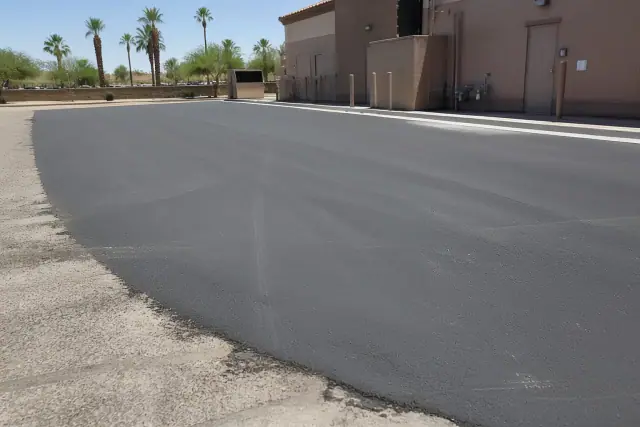
Freshly paved asphalt parking lot behind a restaurant in Phoenix, AZ.

Asphalt milling removal takes off the top layer of existing pavement to a controlled depth before resurfacing, grade correction, or reconstruction. Milling is useful when a Phoenix parking lot or paved area needs improved elevations, better drainage, or removal of deteriorated surface material before new asphalt is installed.

Pavement Planning

How to Choose the Right Asphalt Solution in Phoenix

The right Phoenix asphalt solution depends on the existing base, surface condition, drainage, traffic loads, and how the pavement will be used after installation. Some properties only need crack sealing, patching, sealcoating, or an overlay, while others need milling, grade correction, or full removal and replacement. Scottsdale Asphalt evaluates those conditions before recommending a scope so the finished surface matches the actual problem.

Base Condition and Subgrade Stability

If the base has failed, resurfacing only hides the problem until reflective cracks and soft spots return. We check for unstable subgrade conditions common around fill soils and desert washes, then address compaction, base material, and drainage before new asphalt is placed.

Traffic Loads and Pavement Thickness

A residential driveway and a busy commercial lot do not need the same pavement section. Parking lots with delivery trucks, turning loads, and heavier vehicles may require thicker asphalt and a stronger aggregate base than a low-traffic residential surface.

Drainage and Monsoon Runoff

Phoenix monsoon season runs from June 15 through September 30 per the National Weather Service Phoenix office, and poorly sloped pavement can let runoff work under the surface fast. We design surfaces with a minimum 2% cross-slope where appropriate to direct water away from structures and reduce ponding.

Surface Age, Oxidation, and Maintenance

Well-installed asphalt on low-traffic residential streets can last 20 to 30 years with routine maintenance, while moderate-to-high-traffic arterials and commercial lots often need major rehabilitation after 13 to 17 years. Oxidation, raveling, and open cracks help decide whether maintenance, overlay, or reconstruction makes more sense.

Binder Grade and Heat Performance

Phoenix heat can soften asphalt binder in summer and make fresh pavement vulnerable to rutting under heavy loads. For local conditions, Performance Grade binders such as PG 76-16 or PG 70-10 under AASHTO M 320 standards can affect how the surface performs over the next decade.

Permits and Scope Requirements

Permit needs depend on the project type and property. New driveway installations and significant commercial parking lot construction may require City of Phoenix Development Services review, and commercial work can also involve Streets Transportation review when access, drainage, or right-of-way is affected.

Phoenix Pavement Issues

Common Asphalt Problems for Phoenix Properties

Heat, UV exposure, monsoon water, expansive soils, and high turning loads create recognizable pavement failures across Phoenix driveways, lots, and service roads. The problem visible on the surface is often a clue to what is happening below: weak base, trapped water, unsupported edges, poor compaction, or material that has oxidized past routine maintenance. Scottsdale Asphalt looks for the root cause before recommending crack sealing, patching, overlay, milling, grading correction, or full replacement.

Request Pavement Inspection

Alligator Cracking from Base Failure

Interconnected cracks that look like alligator skin usually point to structural weakness below the surface, not just cosmetic wear. Overlaying that pattern without stabilizing the base often leads to the same cracking returning through the new asphalt.

Thermal Cracking and Temperature Cycling

Phoenix pavement expands and contracts as temperatures swing from intense daytime heat to cooler nights. Longitudinal and transverse cracks can open quickly when the binder stiffens during cooler periods or the base moves below the mat.

Raveling from UV Oxidation

Unprotected asphalt loses binder flexibility under constant sun exposure, leaving loose aggregate, gray color, and a rougher texture. Sealcoating and timely crack sealing help slow that oxidation before moisture starts entering the surface.

Rutting, Depressions, and Soft Spots

Ruts and depressions often appear where turning vehicles, heavy loads, or weak subbase conditions concentrate stress. We evaluate whether the issue is surface wear, insufficient thickness, moisture-softened base, or poor compaction before choosing a repair.

Potholes and Failed Patches

Potholes form when cracks, water, and traffic break apart unsupported asphalt. Durable pothole repair requires removing loose material to firm subgrade and placing new asphalt correctly, not just filling the hole with a temporary patch.

Ponding Water and Drainage Failure

Standing water is one of the fastest ways to shorten pavement life in Phoenix because it softens the base and accelerates cracking after monsoon storms. Correcting slope, edges, elevations, or drainage paths is often just as important as the asphalt repair itself.

Why Choose Us

Why Choose Scottsdale Asphalt in Phoenix?

Phoenix paving is not only about placing hot mix; it is about matching materials, base prep, drainage, and maintenance recommendations to the Valley's heat and monsoon patterns. Scottsdale Asphalt brings that local focus to residential driveways, commercial lots, industrial campuses, and larger government or municipal asphalt projects. We keep estimates clear, explain when resurfacing is enough, and point out when base failure makes full reconstruction the better long-term option.

Local Valley Asphalt Knowledge

The Phoenix metro area holds an estimated 5.19 million residents, and pavement needs vary widely from Ahwatukee driveways to multi-phase West Valley parking lots. Our local focus accounts for caliche layers, intense UV exposure, monsoon drainage patterns, and the demands of the broader Maricopa County market.

Detailed Estimates and Clear Recommendations

We begin with a site assessment and an estimate that covers scope, materials, timeline, and cost. That detail helps property owners compare repair, overlay, milling, and replacement options without guessing what is included.

Organized Crews and Clean Work Areas

Commercial paving and striping need coordination so tenants, customers, and staff can keep moving safely. Our crews organize work areas, complete projects efficiently, and leave the property clean when the job is done.

Simple Process

Our Asphalt Paving Process in Phoenix

A dependable Phoenix asphalt project follows a defined sequence rather than a one-size-fits-all pour. We start by evaluating the surface, base, drainage, traffic, and access needs, then build a scope that identifies the right repair, overlay, or replacement method. When paving begins, each stage supports the next: demolition when needed, subgrade preparation, aggregate base, tack coat, hot mix placement, and final compaction.

01.

Site Assessment and Estimate

We inspect pavement condition, drainage, access, edges, and base symptoms, then prepare an estimate that covers scope, materials, timeline, and cost. This is where we identify whether maintenance, patching, overlay, milling, or full replacement is the right path.

02.

Demolition or Surface Preparation

When old pavement has to come out, we remove failed material before rebuilding the section. For overlays, milling or surface preparation creates the right profile and helps correct elevation or drainage issues before the new lift is installed.

03.

Subgrade Compaction

The subgrade is compacted before base or asphalt placement, with a target such as minimum 95% of maximum dry density per ASTM D1557 when specifications call for it. Addressing unstable soils first helps prevent settlement, soft spots, and premature cracking.

04.

Aggregate Base Placement

We place and compact a uniformly graded aggregate base course to support the asphalt surface. Typical Phoenix sections may use 4 to 6 inches of Class II base for residential applications and 6 to 8 inches for commercial projects, depending on scope and conditions.

05.

Hot Mix Asphalt Placement

Hot mix asphalt is batched at temperatures between 275°F and 325°F and must be placed and compacted before it cools below approximately 185°F. We apply tack coat where needed, place the asphalt lift, and keep the sequence moving so the material compacts properly.

06.

Final Compaction and Finish Details

Final compaction with a steel drum roller helps the surface reach the required density and smoothness for the project. After paving, finish details may include edge cleanup, traffic control removal, striping, directional markings, or access coordination based on the property type.

Result Examples

Asphalt Outcomes for Phoenix Homes & Businesses

Case Study 1: A residential driveway can be rebuilt with proper grading, compaction, and edge support so it handles vehicle traffic, runoff, and soil movement better than a thin surface patch.

Case Study 2: A commercial parking lot can be planned around truck loads, tenant access, ADA layout needs, fire lanes, and high-UV striping so the property stays usable during and after the work.

Case Study 3: An oxidized but structurally sound pavement can often be milled, tacked, and overlaid instead of fully reconstructed, saving disruption while restoring a clean driving surface.

Get Better Pavement

Schedule an Asphalt
Paving
Consultation

Whether you need a Phoenix driveway repaired, a commercial lot resurfaced, a drainage problem corrected, or a new asphalt section installed, Scottsdale Asphalt can review the site and explain the practical options. Share your project details and we will prepare an estimate based on the pavement condition, base needs, access, materials, and scope.

Asphalt Help

FAQs About Asphalt Paving in Phoenix, AZ

Get practical answers about asphalt paving, driveway installation replacement, parking lot paving, asphalt repair, resurfacing overlay, sealcoating, crack sealing, pothole repair, striping, milling removal, drainage, pricing, and maintenance for Phoenix properties. These answers are based on the same local conditions we evaluate during estimates: heat, UV, soils, base condition, traffic loads, and monsoon runoff.

Call Our Experts

Asphalt is usually ready for foot traffic within 24 hours of placement in Phoenix, but vehicle traffic should stay off new pavement for at least 48 to 72 hours under normal summer conditions. Temperatures regularly above 100°F from June through August can help curing, but fresh asphalt remains softer and can scuff during the first week. Avoid parking in the same spot for long periods or placing heavy stationary loads for 30 days, and wait at least 90 days before sealcoating new asphalt.

Common Phoenix pavement problems include alligator cracking from base failure or overloading, longitudinal and transverse cracking from temperature cycling, UV-driven raveling, ruts, depressions, and edge cracking. Caliche layers can be hard when dry but unstable when saturated, and poor drainage can trap monsoon runoff under the mat. The right repair depends on identifying the cause instead of covering the symptom.

Residential asphalt paving in Phoenix generally ranges from $2.00 to $15.00 per square foot depending on project size, access, existing removal, and subgrade condition. Commercial parking lots and larger surfaces may benefit from economies of scale, but material and paving-mixture prices can fluctuate. Scottsdale Asphalt provides itemized estimates that separate materials, labor, equipment, and disposal so the scope is clear.

Properly installed asphalt on residential streets can last 20 to 30 years with routine maintenance. Commercial and higher-traffic surfaces often need major rehabilitation after 13 to 17 years, especially when regular sealcoating and crack sealing are skipped. Phoenix UV exposure is a major factor because it hardens binder, causes raveling, and opens the surface to water infiltration.

Permit requirements depend on the scope and property type. New driveway installations and significant commercial parking lot construction generally require review through the City of Phoenix Development Services Department, while like-for-like maintenance or resurfacing often does not. Commercial projects may also involve the City of Phoenix Streets Transportation Department when access points, drainage, or right-of-way are affected.

Resurfacing, also called an overlay, places a new 1.5 to 2-inch lift of hot mix asphalt over a prepared existing surface when the base is structurally sound. Full replacement is needed when the base has failed, alligator cracking covers significant areas, or drainage corrections require changing the grade. A condition assessment determines which option addresses the real problem.

Permeable asphalt is an open-graded mix that lets stormwater drain through the pavement into a stone reservoir bed below. In Phoenix, it can fit specific commercial or low-impact development applications where stormwater management makes infiltration desirable. The design depends on soil and drainage evaluation so infiltrating water does not undermine the pavement structure.

Sealcoating is commonly recommended every 3 to 5 years in Phoenix, depending on traffic volume and sun exposure. The sealer helps slow UV oxidation, reduce moisture intrusion, and protect the surface from raveling. Cracks, potholes, and unstable edges should be repaired before sealer is applied.

Crack sealing is appropriate when cracks are isolated and the pavement around them is still stable. Asphalt repair is needed when the surface has broken down, potholes have formed, edges are failing, or the base has softened. Scottsdale Asphalt checks the surrounding pavement condition before recommending sealing, patching, resurfacing overlay, or replacement.

Phoenix asphalt must handle intense UV exposure, high surface temperatures, expansive soils, caliche layers, and monsoon drainage. Asphalt binder can soften under summer heat and become vulnerable to rutting, while cooler snaps can contribute to thermal cracking. Local mix selection, base preparation, drainage design, and maintenance intervals all need to account for those conditions.

The right thickness depends on traffic loads, subgrade condition, drainage, and property use. Many commercial Phoenix lots are designed around 3 to 4 inches of compacted hot mix asphalt over a well-graded aggregate base, with heavier-use sites needing more careful engineering. A site review is needed before setting a final pavement section.

Water that cannot shed off the surface can enter cracks, soften the base, and accelerate pavement failure after monsoon storms. Scottsdale Asphalt designs drainage through grading, cross-slopes, elevation correction, and base preparation rather than relying only on the surface lift. Proper drainage is one of the differences between a short-lived patch and a stable pavement section.

Asphalt milling removal takes off the top layer of pavement to a controlled depth using a cold planer. It is commonly used before resurfacing overlay work when the existing surface has grade, elevation, drainage, or surface condition problems. The milled material becomes reclaimed asphalt pavement that can often be reused in new hot mix or as base material.

Scottsdale Asphalt works throughout Phoenix and Maricopa County, including Ahwatukee Foothills, Alhambra, Camelback East, Central City, Deer Valley, Desert View, Encanto, Estrella, Laveen, Maryvale, North Mountain, Paradise Valley Village, Rio Vista, South Mountain, and West Town. Nearby communities served include Scottsdale, Tempe, Mesa, Chandler, Gilbert, Glendale, Peoria, Surprise, Avondale, Goodyear, Buckeye, Queen Creek, and Casa Grande.

A typical project starts with a site assessment and estimate, then moves through demolition if needed, subgrade preparation and compaction, aggregate base placement, tack coat, hot mix asphalt placement, and final compaction. For hot mix work, material temperature and timing matter because the asphalt must be placed and compacted before it cools too far. Finish details may include cleanup, access coordination, striping, and final traffic flow restoration.