Proudly serving Scottsdale, Mesa, Tempe, Phoenix, Chandler, Gilbert & surrounding areasCall or Text 24/7: 602-905-5399
Aerial view of a paved asphalt parking lot at an office complex in Scottsdale, AZ with desert mountains in the distance.

Asphalt Paving in Queen Creek, AZ: Installation and Repair Services

Scottsdale Asphalt provides asphalt paving in Queen Creek, AZ for residential driveways, commercial parking lots, asphalt repair, resurfacing overlays, sealcoating, crack sealing, pothole repair, parking lot striping, and asphalt milling removal. We work across the Maricopa County and Pinal County portions of Queen Creek, from neighborhoods near Cortina and Meridian to commercial corridors along Ellsworth Road and Rittenhouse Road. Our crews build and maintain asphalt surfaces for homes, HOAs, shopping centers, warehouses, and rural properties that need durable pavement in the southeast Valley.

Queen Creek pavement faces intense UV exposure, monsoon runoff, and soils that can shift with moisture changes, so base preparation and drainage matter as much as the asphalt mat itself. We assess the subgrade, thickness, cracking, rutting, edges, and drainage before recommending repair, overlay, or full reconstruction. That field-first approach helps property owners avoid paying for replacement when resurfacing or targeted patching will solve the problem.

From driveway installation replacement to phased parking lot paving, Scottsdale Asphalt plans work around access, haul timing, compaction temperature, and clean turnover. Request an estimate when you need a clear scope for asphalt paving, asphalt repair, resurfacing overlay, sealcoating, crack sealing, pothole repair, parking lot striping, or asphalt milling removal in Queen Creek.

★ ★ ★ ★ ★5/5 Customer Rating - 26 Years in the Asphalt Trade - Thousands of Paving Jobs Completed - Licensed, Bonded & Insured - Homes, Businesses & Commercial Sites
Asphalt Services

Asphalt Services in Queen Creek, AZ

Scottsdale Asphalt provides asphalt paving, driveway installation replacement, parking lot paving, asphalt repair, asphalt resurfacing overlay, asphalt sealcoating, crack sealing, pothole repair, parking lot striping, and asphalt milling removal for Queen Creek properties. Our crews serve residential, commercial, HOA, access road, and light industrial asphalt needs across the southeast Valley. For another nearby service area, see Apache Junction .

Commercial Commercial Asphalt Paving

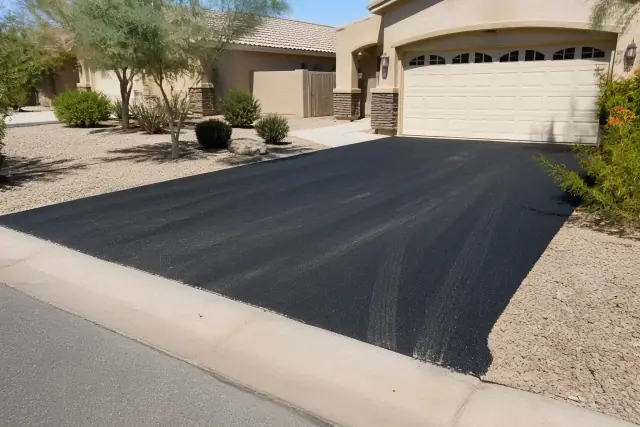
Freshly paved asphalt driveway meeting the street in a sunny Queen Creek, AZ neighborhood.

Scottsdale Asphalt provides asphalt paving in Queen Creek for new residential surfaces, commercial sites, access roads, and light industrial properties. Each project starts with subgrade review, base preparation, grading, drainage planning, and hot mix placement so the finished surface can handle Arizona heat, monsoon runoff, and daily traffic. We match the asphalt section to the property type instead of using one generic paving approach.

Explore Service

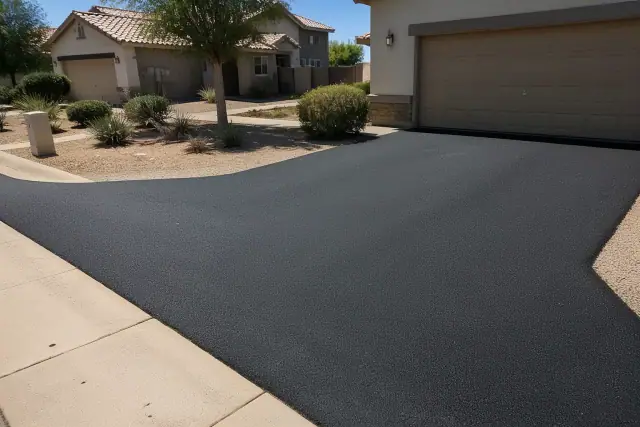
Driveway Installation & Replacement

Freshly paved asphalt loading drive at a warehouse in Queen Creek, AZ with an adjacent concrete dock.

Driveway installation and replacement in Queen Creek starts with removing failed material when needed, correcting the grade, compacting the base, and setting drainage so water moves away from the home and pavement edges. Scottsdale Asphalt installs new driveway asphalt and replaces worn residential driveways with attention to edge support, compaction, and clean transitions at garages, sidewalks, and private drives. A properly installed and maintained residential asphalt driveway can last 20 to 30 years.

Explore Service

Parking Lot Paving

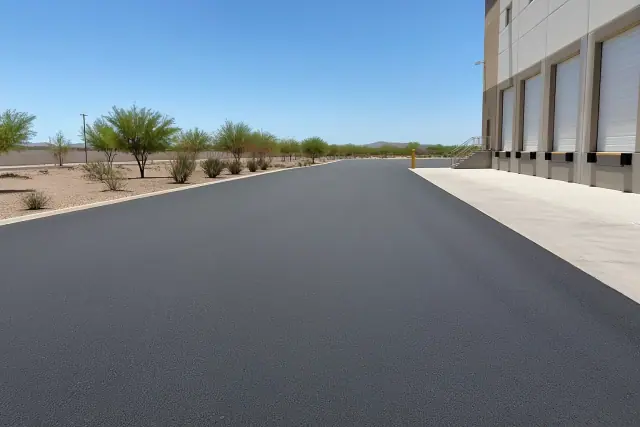
Freshly paved asphalt loading drive at a warehouse in Queen Creek, AZ with an adjacent concrete dock.

Parking lot paving in Queen Creek requires thicker asphalt and base sections than most residential work because commercial lots carry cars, delivery vehicles, trash trucks, and foot traffic every day. Retail and light commercial lots commonly use 3 to 4 inches of compacted asphalt over 6 to 8 inches of compacted base, while loading zones or truck routes may need heavier specifications. We plan drainage, ADA striping needs, entrances, and phased scheduling before paving begins.

Explore Service

Asphalt Repair

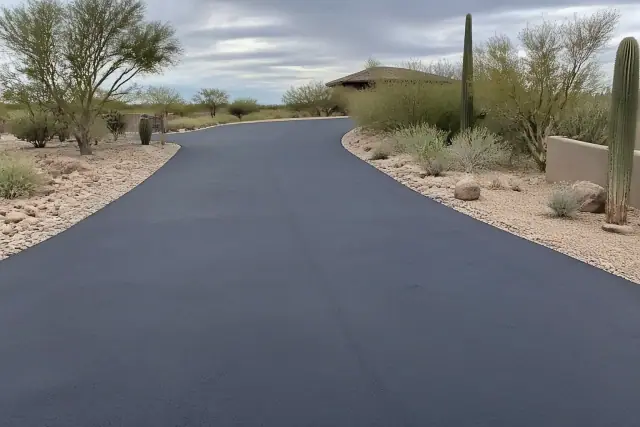
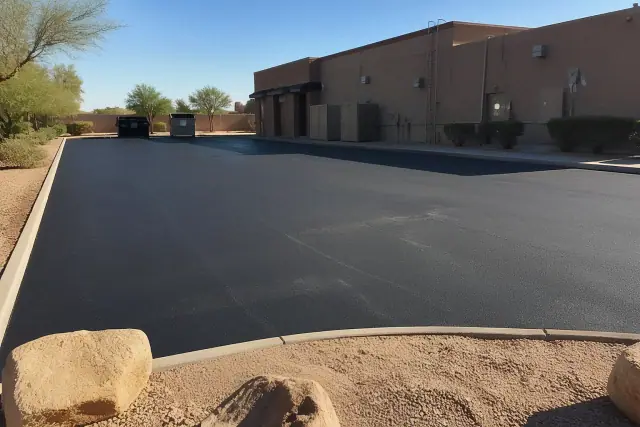
Freshly paved asphalt driveway at a desert property in Queen Creek, AZ, surrounded by native landscaping.

Asphalt repair in Queen Creek should be matched to the type of failure instead of covered with a quick surface patch. Hairline cracks may only need routing and sealing, isolated broken areas can be cut and patched, and alligator cracking usually means the failed section needs full-depth repair down to stable base. Scottsdale Asphalt repairs damaged pavement so the surrounding surface drains properly and the patch bonds to the existing asphalt.

Asphalt Resurfacing & Overlay

Freshly sealed crack in a parking lot pavement at a retail center in Queen Creek, AZ.

Asphalt resurfacing overlay is used when the existing pavement is worn, oxidized, cracked, or rough but the base is still structurally sound. Scottsdale Asphalt evaluates the surface before recommending overlay, because placing new asphalt over a failing base will usually cause the same cracks and depressions to return. A typical mill-and-overlay can include controlled milling, tack coat, and a new asphalt lift tied into the surrounding grades.

Asphalt Sealcoating

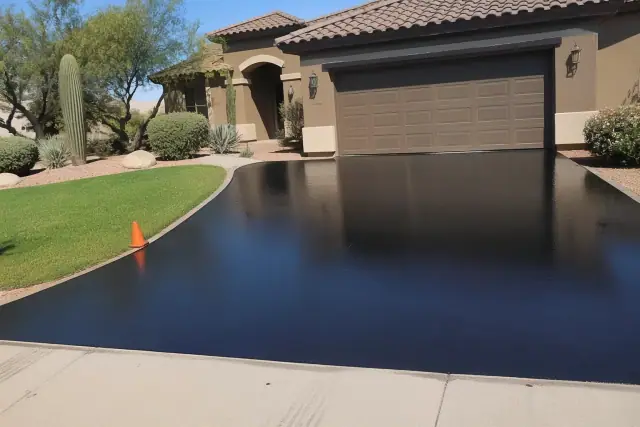
Freshly sealcoated black asphalt driveway at a residential home in Queen Creek, AZ, with a small orange safety cone.

Asphalt sealcoating helps slow UV oxidation, fuel staining, and water penetration on pavement that is still structurally sound. In Queen Creek, driveway sealcoating is commonly recommended every 3 to 5 years, while higher-traffic commercial surfaces often need service every 2 to 3 years. We clean the surface, fill cracks first when needed, and apply sealer in even passes for a cleaner, longer-lasting protective finish.

Crack Sealing

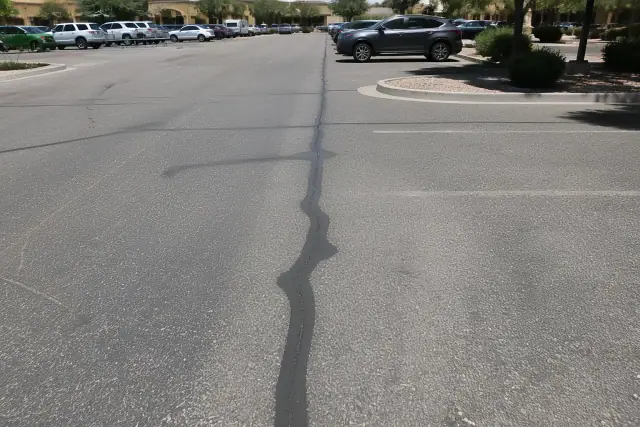
Freshly sealed crack in a parking lot pavement at a retail center in Queen Creek, AZ.

Crack sealing helps protect Queen Creek asphalt before water reaches the base and weakens the pavement from below. Scottsdale Asphalt cleans and prepares cracks, routes them where appropriate, and installs sealant to reduce water infiltration during monsoon storms and normal irrigation runoff. This service is best for active linear cracks before they spread into alligator cracking or potholes.

Pothole Repair

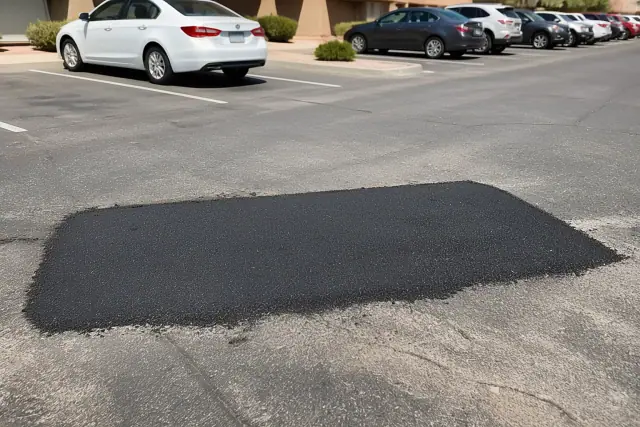
Newly repaired asphalt patch in an apartment parking lot in Queen Creek, AZ.

Pothole repair addresses failed pavement areas that can damage vehicles, create trip hazards, and allow water to keep breaking down the base. Scottsdale Asphalt cuts damaged asphalt to clean square edges, removes loose material, recompacts the base, applies tack, and installs hot mix so the repair ties into the surrounding surface. For larger failures, we look for drainage or base issues that caused the pothole instead of only filling the hole.

Parking Lot Striping

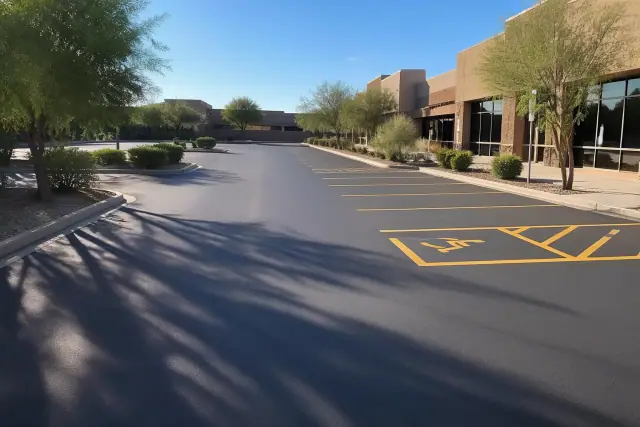
Freshly paved and striped asphalt drive aisle with yellow parking lines at an office building in Queen Creek, AZ.

Parking lot striping keeps Queen Creek commercial properties organized, code-conscious, and easier for customers and delivery drivers to navigate. Scottsdale Asphalt provides painted line striping, ADA-compliant stall and access aisle markings, directional arrows, fire lane markings, handicap symbols, and thermoplastic striping for heavier-use areas. Striping is laid out after paving or resurfacing has cooled and cured enough for clean application.

Asphalt Milling & Removal

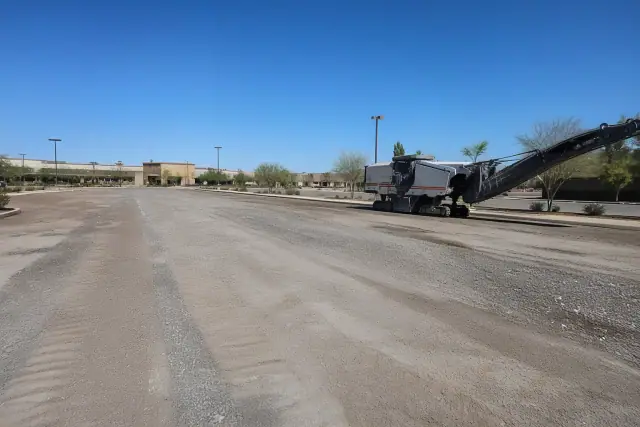
Freshly milled commercial parking lot with gravel base and heavy machinery in Queen Creek, AZ.

Asphalt milling removal prepares worn pavement for resurfacing by removing a controlled depth of existing asphalt while preserving grades, entrances, curbs, and drainage transitions. When pavement damage is deeper, removal also allows failed sections to be corrected before new asphalt is installed. Scottsdale Asphalt uses milling and removal to create a cleaner bond for overlays and to avoid building new pavement over unstable material.

Pavement Planning

How to Choose the Right Asphalt Solution in Queen Creek

The right asphalt recommendation depends on base condition, drainage, traffic loads, pavement thickness, and the level of surface distress. Queen Creek sites can vary from sandy alluvial ground near the San Tan Mountains to lower valley areas with expansive clays, so the same pavement section is not right for every property. Scottsdale Asphalt evaluates the whole pavement system before recommending repair, overlay, reconstruction, or a maintenance plan.

Base Condition and Soil Stability

Asphalt performs only as well as the material supporting it. Expansive clay soils can shrink and swell as moisture changes, while sandy alluvial deposits may require different compaction and base-depth decisions. We stabilize and compact the subgrade before paving so the finished surface has a consistent foundation.

Drainage and Monsoon Runoff

Poor water flow is one of the most common causes of early asphalt failure in Queen Creek. Monsoon runoff can force water through cracks, erode shoulders, and soften the base if the pavement does not shed water correctly. We design surface slope, edge support, and drainage paths before the asphalt mat is placed.

Traffic Loads and Pavement Thickness

A driveway, retail lot, truck court, and warehouse apron do not carry the same loads. Areas that see regular semi-trailer traffic commonly need 4 to 6 inches of compacted asphalt over 8 to 12 inches of base. Matching pavement thickness to actual traffic helps prevent premature rutting and structural failure.

Heat, UV and Binder Selection

Queen Creek averages well over 300 days of sunshine annually, and pavement surface temperatures can exceed 150°F during summer. Winter nights can also drop into the low 30s°F in December and January, creating expansion and contraction stress. We select binder grades and mix designs with Arizona heat, UV exposure, and thermal cycling in mind.

Repair, Overlay or Replacement

Surface wear does not always mean full replacement, and replacement is not always avoidable. Oxidized pavement with a sound base may be a candidate for overlay, while alligator cracking, sinking, or severe rutting usually points to base failure. Scottsdale Asphalt uses condition assessment and thickness testing to recommend the least invasive solution that will still last.

Maintenance Timing and Budget

Maintenance is most effective before cracks widen, water reaches the base, or raveling exposes too much aggregate. Crack sealing before monsoon season and seal coating on a planned interval can defer major rehabilitation. We help owners compare near-term repair cost against long-term pavement life so budgets are planned instead of reactive.

Queen Creek Asphalt Issues

Common Asphalt Problems for Queen Creek Properties

Asphalt problems in Queen Creek usually trace back to heat, water, weak base support, traffic loading, or delayed maintenance. Our inspections look for the visible symptom and the underlying cause, because sealing a structural failure or overlaying trapped moisture will not solve the issue. The goal is to restore safe use while protecting the pavement section from the next heat cycle or monsoon storm.

Request Pavement Inspection

Oxidized, Brittle Asphalt

Arizona UV exposure dries and stiffens asphalt binder until the surface loses flexibility. In Queen Creek summer conditions, pavement temperatures above 150°F can accelerate oxidation, surface cracking, and raveling. Seal coating and timely crack sealing help slow that breakdown before the surface becomes too brittle.

Alligator Cracking from Base Failure

Alligator cracking looks like interconnected cracks across the pavement surface and usually signals movement or weakness below the asphalt. Surface sealer will not correct this kind of failure. The affected area needs to be cut out, removed to stable support, recompacted, tacked, and patched with hot mix.

Potholes and Failed Patches

Potholes form when water enters cracks, weakens the base, and traffic breaks loose the unsupported asphalt. A lasting patch needs clean square edges, failed material removal, base recompaction, tack coat, and hot mix that bonds to the surrounding pavement. We avoid shallow patching where the base problem is still active.

Rutting and Depressions

Ruts or depressions in wheel paths show that the pavement, base, or subgrade is deforming under load. Rutting more than half an inch deep is a warning sign that the pavement section may not have enough bearing capacity. Truck courts, loading docks, and delivery lanes need heavier specifications than light-use parking areas.

Edge Raveling and Shoulder Erosion

Monsoon runoff can undermine pavement edges, especially on private roads, rural drives, and lots without adequate shoulder support. Once the edge starts to unravel, water can reach the base more easily and traffic can break the pavement back farther. Edge restraints, proper grading, and drainage outfalls help protect vulnerable edges.

Faded Striping and ADA Marking Wear

High UV exposure and frequent traffic can wear painted lines faster than property owners expect. Faded stalls, arrows, fire lanes, or access aisles reduce organization and can create compliance concerns for commercial sites. Thermoplastic striping is often the better choice for high-traffic Queen Creek parking lots where standard paint wears quickly.

Why Choose Us

Why Choose Scottsdale Asphalt in Queen Creek?

Scottsdale Asphalt brings local paving knowledge to Queen Creek projects where soil, drainage, access, and heat all affect the finished result. Our recommendations are based on the actual condition of the site, not a one-size-fits-all quote. Customers get a written scope, appropriate material choices, and crews focused on compaction, drainage, clean striping, and a finished surface that matches the agreed work.

Arizona Weather Paving Experience

Paving in Arizona requires close control of haul timing, mat temperature, and rolling sequence. Summer heat can change how the asphalt surface skins over, even when the deeper mat still needs proper compaction. Our crews sequence placement and rolling for Queen Creek conditions instead of treating desert paving like work in a mild climate.

Queen Creek Soil and Drainage Knowledge

The southeast Valley includes both agricultural lowlands and hillier terrain near the San Tan Mountains, and that variation affects base design. We account for expansive soils, sandy deposits, drainage paths, and edge support before building the pavement section. That local field knowledge helps reduce preventable cracking, heaving, and shoulder failure.

Clear Scope, Permits and Pricing

Commercial projects may require coordination with the Town of Queen Creek Public Works Department, Maricopa County, or Pinal County, especially when work affects right-of-way. We document the scope, surface preparation, thickness approach, and finish details before work begins. Arizona Registrar of Contractors licensing is required for paving work above threshold values, and Scottsdale Asphalt carries the required licensing, bonding, and insurance for Queen Creek projects.

Simple Process

Our Asphalt Paving Process in Queen Creek

Every Queen Creek asphalt project follows a sequence built around diagnosis, preparation, installation, compaction, and verification. The details change by site, but the discipline does not: assess the existing conditions, prepare the base, place the right material, compact it correctly, and confirm drainage and finish quality before the job is complete.

01.

Site Inspection and Condition Assessment

We walk the site to document cracking, alligator distress, rutting, drainage patterns, edge condition, and existing pavement thickness where needed. For new construction, we evaluate the subgrade soil type and moisture condition. The result is a written scope that explains what work is recommended and why.

02.

Base Preparation and Grading

The base is graded, shaped, and compacted to a uniform density before asphalt placement. We add aggregate base to the specified depth and compact in lifts with a vibratory roller. Grades are checked with a level or laser so water moves away from structures and does not pond on the pavement.

03.

Milling, Cutouts or Surface Prep

Existing pavement may need milling, crack cleaning, patch cutouts, or failed-section removal before new asphalt is placed. We create clean edges, remove unstable material, and re-establish grade so repairs or overlays tie in properly. Tack coat is applied where new asphalt must bond to an existing surface.

04.

Hot Mix Placement

Hot mix is ordered from a local production facility to reduce haul time and temperature loss. A paving machine spreads the asphalt at a uniform screed depth for the project specification. Crew timing is planned so the material can be compacted while it remains in the workable temperature range.

05.

Compaction and Density Work

Compaction begins immediately after placement using a deliberate roller sequence. Steel drum and rubber-tire rollers are used for breakdown, intermediate, and finish passes so the mat reaches target density. Proper compaction is one of the biggest differences between pavement that lasts and pavement that fails early.

06.

Finishing, Striping and Walkthrough

After compaction, we verify mat thickness, surface smoothness, drainage slope, and edge condition. Pavement marking or thermoplastic striping is completed after the surface has cooled and cured. We remove equipment, clean debris, and walk the finished surface with the customer before closing the project.

Result Examples

Asphalt Outcomes for Queen Creek Properties & Businesses

Case Study 1: A residential driveway can move from cracked, uneven access to a graded asphalt surface with compacted base, supported edges, and slope that directs stormwater away from the home.

Case Study 2: A commercial parking lot can be resurfaced or rebuilt in phases with fresh striping, ADA-compliant markings, clearer circulation, and drainage details that reduce standing water near storefronts.

Case Study 3: A private road, warehouse drive, or rural access route can be paved with crown, shoulders, and drainage outfalls designed for monsoon runoff and the vehicle loads the property actually sees.

Get Better Pavement

Schedule an Asphalt
Paving
Estimate

Tell Scottsdale Asphalt what you need paved, repaired, resurfaced, striped, or maintained in Queen Creek, and we will review the site conditions before recommending the right scope. Call or request an estimate for driveway asphalt, commercial parking lot paving, access road work, crack repair, pothole repair, seal coating, milling, overlay, or pavement marking.

Asphalt Paving Help

FAQs About Asphalt Paving in Queen Creek, AZ

These answers cover the most common questions Queen Creek property owners ask about asphalt paving, repair, resurfacing, seal coating, striping, maintenance, pricing factors, and local pavement conditions.

Call Scottsdale Asphalt

Yes. Arizona has an extensive network of asphalt-paved roads at the state, county, and municipal levels, and Queen Creek maintains asphalt streets through pavement preservation work. Asphalt is common across the Phoenix metro because it can be rehabilitated in stages and performs well through Arizona temperature swings when properly designed and maintained.

Low-traffic residential driveways and similar pavement can last 20 to 30 years when properly installed and maintained. Without maintenance, asphalt may show significant deterioration in roughly 13 to 17 years, especially in high-UV environments. Seal coating, crack sealing, drainage correction, and targeted patching help extend useful life.

Cost depends on asphalt quantity, base preparation, pavement thickness, milling or removal, drainage needs, site access, haul distance, and current material pricing. Paving-mixture producer prices surged 29.8% in 2025, which affects project budgets. Material-only asphalt costs typically range from $0.75 to $2.00 per square foot, while total installed cost varies by site conditions.

Resurfacing places a new asphalt layer over pavement that has surface deterioration but a stable base. Full replacement is needed when the base or subgrade has failed, which can show up as alligator cracking, severe rutting, sinking, or heaving. Scottsdale Asphalt inspects thickness and distress patterns before recommending overlay or reconstruction.

Monsoon storms can create fast runoff that erodes shoulders, undermines edges, and drives water through unsealed cracks. Once water reaches the base, the pavement can lose support and begin cracking, rutting, or forming potholes. Crack sealing before monsoon season and proper drainage slope are important preservation steps.

Surface cracks less than half an inch wide may be candidates for crack sealing and seal coat if the base is still stable. Alligator cracking usually indicates base failure and needs full-depth repair in the affected area. Rutting more than half an inch deep often points to insufficient support or an overloaded pavement section.

Scottsdale Asphalt installs standard painted line striping, thermoplastic striping, ADA-compliant stalls and access aisles, fire lane striping, directional arrows, and handicap symbols. Thermoplastic striping is often a better fit for high-traffic commercial parking lots because painted markings can wear quickly under UV exposure and traffic. Layout is verified before application so the finished markings are straight and evenly spaced.

Driveways should generally be seal coated every 3 to 5 years, while high-traffic commercial surfaces often need seal coating every 2 to 3 years. The surface should be cleaned and cracks should be filled before sealer is applied. Seal coating slows UV oxidation, fuel damage, and water penetration but does not repair a failed base.

Retail and light commercial parking lots typically require 3 to 4 inches of compacted asphalt over 6 to 8 inches of compacted base. Areas with delivery trucks, heavy vehicles, loading docks, or warehouse traffic may need heavier designs. Truck courts and loading aprons commonly require 4 to 6 inches of compacted asphalt over 8 to 12 inches of base.

Hot mix asphalt is produced at about 300°F to 350°F. It should be placed and compacted while it remains workable, typically above 185°F. Even in Queen Creek summer heat, crews still need to manage haul time, placement speed, and rolling sequence to achieve proper density.

Scottsdale Asphalt serves properties throughout the Maricopa County and Pinal County portions of Queen Creek. Service areas include Cortina, Sossaman Estates, Ash Creek, Harvest, Meridian, Ellsworth Road, Rittenhouse Road, Queen Creek Marketplace, and the SR-24 corridor. The company also serves nearby communities such as San Tan Valley, Gilbert, Chandler, Mesa, Maricopa, and the broader southeast Phoenix metro.

Some projects do, especially work that affects public right-of-way, commercial site development, drainage, or access connections. Projects may require coordination with the Town of Queen Creek Public Works Department, Maricopa County Department of Transportation, or Pinal County depending on location. Scottsdale Asphalt coordinates permitting requirements when they apply to the paving scope.

Yes. Scottsdale Asphalt paves private roads, ranch entrances, warehouse access drives, and subdivision entry roads. These projects need attention to crown profile, shoulder grading, drainage outfall design, and the vehicle loads expected on the route. Those details help the road hold up during monsoon runoff and repeated traffic.

The subgrade is shaped and compacted, aggregate base is added to the specified depth, and the base is compacted in lifts. Grades are checked so water drains away from structures and does not pond on the finished surface. Cutting corners on base preparation is one of the fastest ways to cause early asphalt failure.

Drainage protects the base that supports the asphalt. Water that ponds on the surface or enters through cracks can weaken the supporting layers and lead to potholes, rutting, edge failure, or alligator cracking. Proper slope, crack sealing, edge support, and drainage outlets are especially important in Queen Creek because monsoon storms can drop heavy rain quickly.