Proudly serving Scottsdale, Mesa, Tempe, Phoenix, Chandler, Gilbert & surrounding areasCall or Text 24/7: 602-905-5399
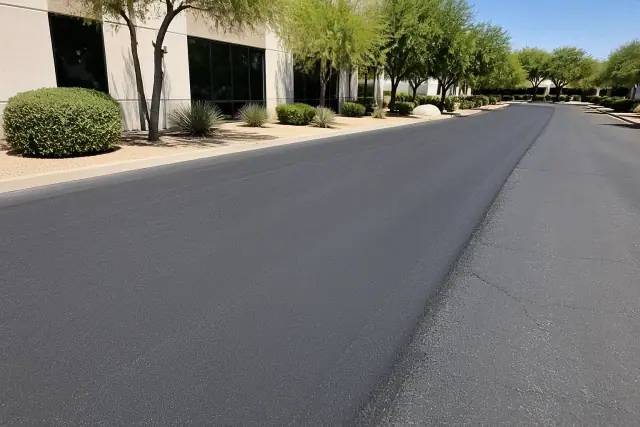
Aerial view of a paved asphalt parking lot at an office complex in Scottsdale, AZ with desert mountains in the distance.

Commercial Asphalt Paving in Scottsdale, AZ

Scottsdale Asphalt provides commercial asphalt paving in Scottsdale, Arizona, for retail centers, office properties, industrial yards, and other business sites. We install new hot mix asphalt, commercial parking lots, and traffic-matched pavement for passenger vehicles, delivery trucks, and heavy equipment. Our crews also handle asphalt resurfacing, overlays, milling, pothole repair, and full-depth reconstruction. Sealcoating, crack sealing, and parking lot striping round out our pavement maintenance services.

Scottsdale pavement faces unusually intense heat, UV exposure, monsoon downpours, and caliche-heavy soil. Dark pavement surface temperatures regularly climb past 150 degrees during summer, while the July and August monsoon cycle can expose weak drainage and under-compacted base material. We design around traffic loads, positive drainage, proper aggregate base compaction, and hot mix asphalt specifications suited to the Sonoran Desert. Our crews carry Arizona Registrar of Contractors licensing and follow practices aligned with National Asphalt Pavement Association guidelines and ADOT hot mix asphalt standards.

A site assessment lets us compare repair, resurfacing, and reconstruction before recommending a scope. Ask for a free paving quote based on your property's base condition, drainage needs, traffic, and planned asphalt thickness.

Scottsdale Asphalt provides asphalt paving throughout Scottsdale and nearby Paradise Valley, Tempe, Mesa, Chandler, Gilbert, Phoenix, and East Valley communities.

★ ★ ★ ★ ★5/5 Customer Rating · 26 Years in the Asphalt Trade · Thousands of Paving Jobs Completed · Licensed, Bonded & Insured · Homes, Businesses & Commercial Sites

Commercial Paving Options & Benefits

What Is Commercial Asphalt Paving?

Commercial asphalt paving combines a compacted subgrade and aggregate base with a hot mix asphalt surface designed for the property's traffic and drainage. The structural section must carry daily vehicle loads without trapping water beneath the mat.

Retail parking areas, warehouse yards, multi-tenant offices, and industrial sites do not all need the same pavement design. Passenger-vehicle lots use a different asphalt thickness and base plan than lanes serving delivery trucks or heavy equipment.

New hot mix asphalt paving in the Phoenix metro area typically runs $4 to $7 per square foot. Full-depth commercial installations can cost more when failed base material, drainage changes, or heavy traffic loads require a deeper structural section.

Benefits of Professional Commercial Paving

Scottsdale grew from 217,385 residents in 2010 to 241,361 at the 2020 census, bringing more commercial development and customer traffic. A properly designed lot supports that daily use while protecting the property's appearance and long-term pavement budget.

  • A clean, even surface presents a more professional arrival for customers and tenants.
  • Correct grading reduces standing water, soft spots, and base-layer damage.
  • Traffic-matched base and asphalt thickness help prevent rutting in truck lanes.
  • Repairing potholes and uneven areas can reduce trip-and-fall exposure.
  • Quality paving with routine maintenance can perform for 20 years or more.
  • Phased paving can keep portions of a commercial lot open during construction.
  • A sound-base overlay can restore the surface without full reconstruction cost.
  • Preventive maintenance can help move Arizona pavement from a 12-year outcome toward a 25-year service life.
Paving & Maintenance Services

Commercial Asphalt Paving Services

We cover new commercial paving, parking lot installation, industrial and municipal pavement, resurfacing, repairs, and ongoing surface maintenance. Each service starts with the condition of the base, expected traffic, drainage, and the way the property needs to operate during the work.

Commercial Asphalt Paving

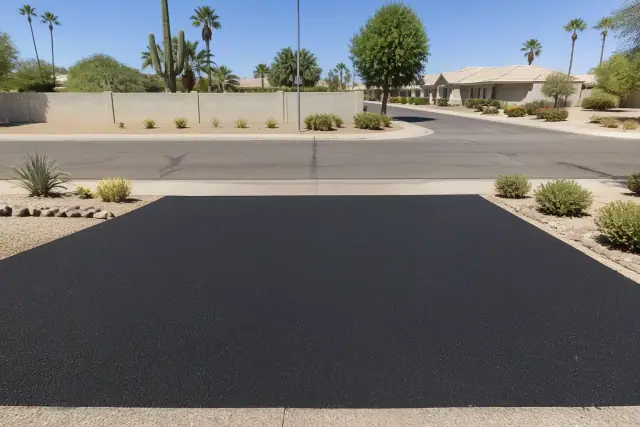
Freshly paved black asphalt driveway meeting a concrete curb on a sunny street in Scottsdale, AZ.

We build new hot mix asphalt surfaces for Scottsdale business properties with base depth, asphalt thickness, joints, and drainage matched to the intended use. The goal is a durable structural section, not a surface placed over unresolved soil or water problems.

Request Estimate

Commercial Parking Lot Paving

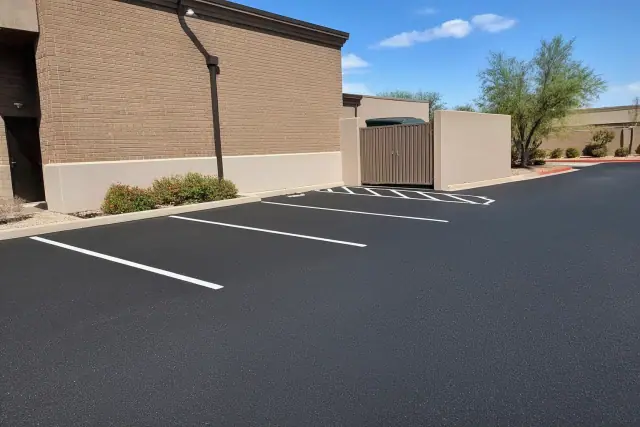
Freshly paved asphalt parking lot with crisp white lines behind a restaurant in Scottsdale, AZ.

Parking lot paving covers layout, base preparation, drainage slopes, asphalt placement, compaction, and final markings. We coordinate the work to limit disruption for tenants, employees, deliveries, and customer parking.

Request Estimate

Industrial & Municipal Asphalt Paving

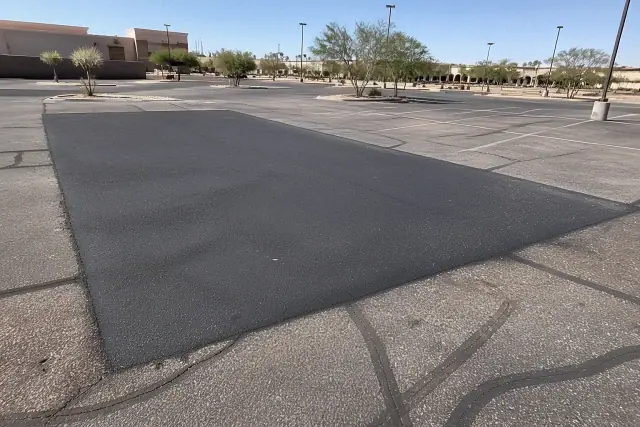
A freshly paved asphalt patch in a commercial parking lot in Scottsdale, AZ.

Industrial yards and municipal paving areas require sections designed for their actual axle loads and operating patterns. Truck routes, equipment zones, and delivery lanes may need more base and asphalt than standard passenger-vehicle parking areas.

Request Estimate

Asphalt Resurfacing & Overlays

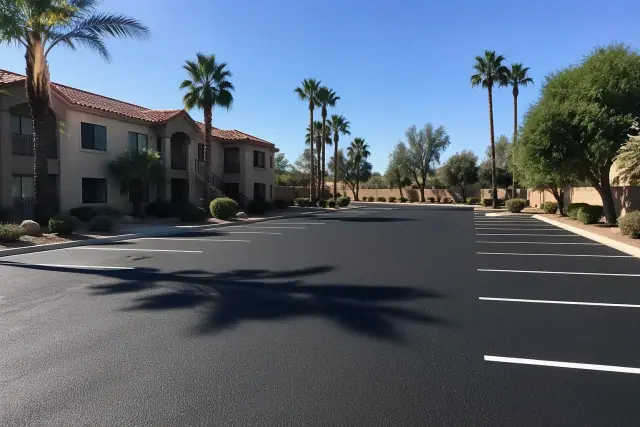
Freshly paved asphalt parking lot with white lines at an apartment complex in Scottsdale, AZ.

When the base remains sound, milling and resurfacing can correct surface cracking, moderate rutting, and widespread wear without rebuilding the entire lot. We repair isolated base issues before bonding a new hot mix asphalt overlay to the prepared surface.

Request Estimate

Pothole Repair & Asphalt Patching

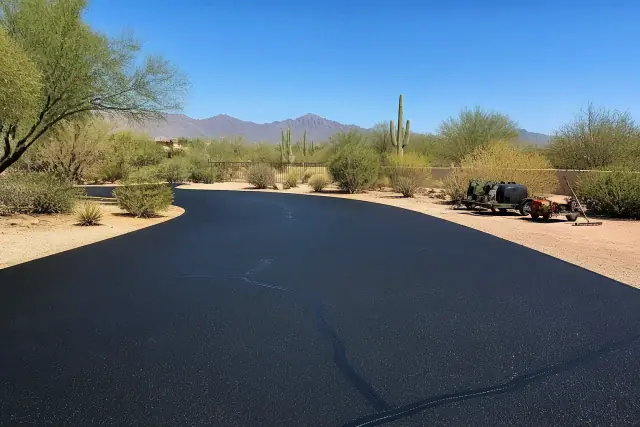
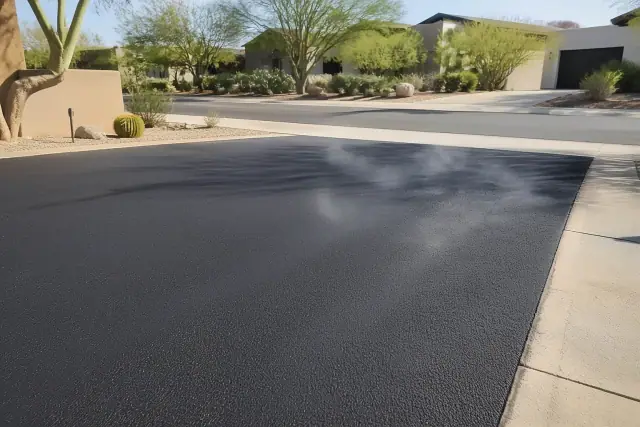
Freshly paved black asphalt driveway with sealcoating equipment at a desert home in Scottsdale, AZ.

Durable pothole repair removes failed material to a sound base, corrects the underlying problem, and uses compacted hot mix asphalt to match the surrounding grade. A surface-only patch cannot solve water damage or weak subgrade beneath the hole.

Request Estimate

Sealcoating, Crack Sealing & Striping

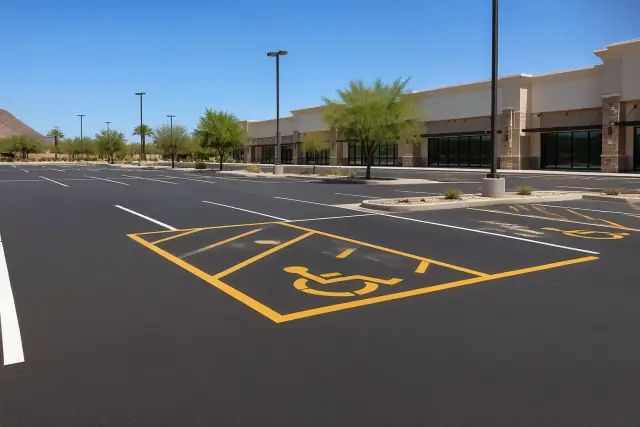
Freshly paved retail parking lot with yellow ADA spaces and white lane lines in Scottsdale, AZ.

Preventive maintenance protects asphalt binder from UV oxidation, keeps water out of the base, and restores clear parking-space markings. Timely sealcoating, hot-pour crack sealing, and restriping help a commercial lot stay serviceable and professional.

Request Estimate
Project-Specific Paving Options

Commercial Paving Project Approaches

The right approach depends on whether the base is sound, how the surface is failing, and what traffic the pavement must carry. We compare new installation, reconstruction, overlays, preventive maintenance, and final marking needs against the actual site condition.

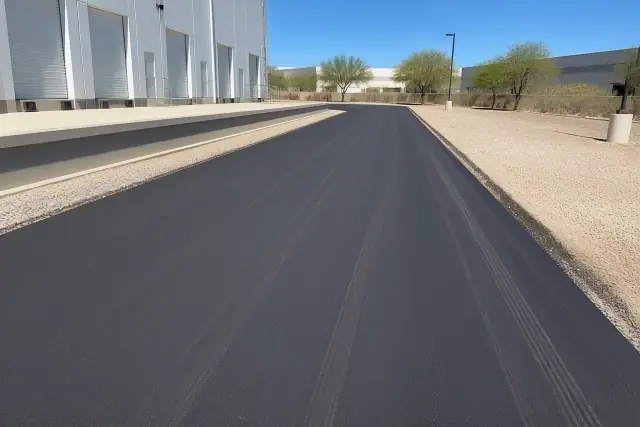
Freshly paved asphalt loading drive at a warehouse in Scottsdale, AZ.

New Hot Mix Asphalt Paving

New paving creates the complete pavement section for an undeveloped or fully reconstructed area. The mix, base, drainage, and thickness are selected around Scottsdale heat and the property's expected traffic.

  • Typical Phoenix metro new-paving cost of $4 to $7 per square foot
  • Site assessment for soil, drainage, layout, and expected traffic
  • Aggregate base thickness matched to anticipated vehicle loads
  • Generally 2 to 3 inches of asphalt for standard parking areas
  • Additional pavement depth where heavy trucks or equipment operate
Request Estimate
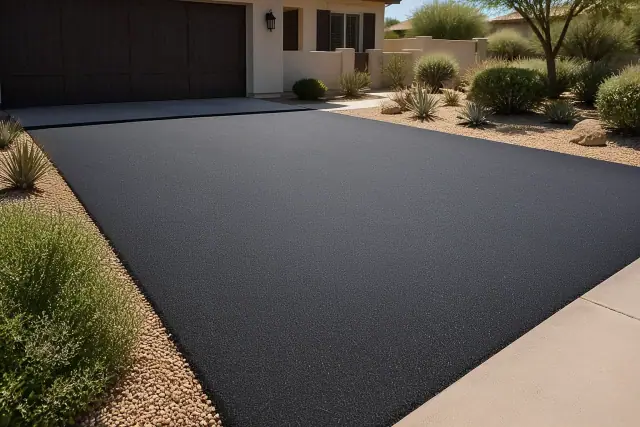
Freshly paved dark asphalt residential driveway with desert landscaping in Scottsdale, AZ.

Full-Depth Pavement Reconstruction

Reconstruction is appropriate when alligator cracking, recurring potholes, settlement, or soft areas show that the base has failed. It addresses the structural cause instead of covering it with another temporary surface.

  • Remove failed asphalt and unsuitable base material
  • Compact the subgrade before rebuilding the pavement section
  • Place and compact aggregate base material in lifts
  • Shape positive slopes toward inlets or swales
  • Install and compact new hot mix asphalt to the design grade
Request Estimate
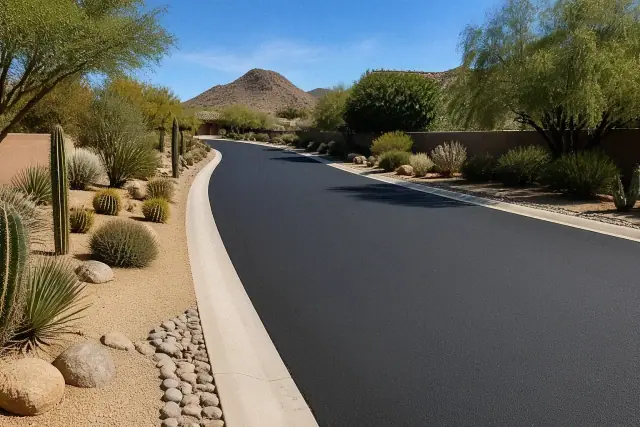
Newly paved black asphalt road in a residential neighborhood in Scottsdale, AZ.

Asphalt Milling & Overlay

Milling and overlay work best when the base is structurally sound but the surface has widespread cracking, wear, or moderate rutting. The process restores the wearing course while preserving usable pavement structure below.

  • Mill the top 1 to 2 inches of existing pavement
  • Repair any localized base defects uncovered during milling
  • Bond a new hot mix asphalt overlay to the prepared surface
  • Typical resurfacing cost of $2.50 to $4.50 per square foot
  • A properly executed overlay can extend pavement life by 10 to 15 years
Request Estimate
Fresh asphalt paving patch in an office park drive aisle under bright sunlight in Scottsdale, AZ.

Preventive Sealcoating & Crack Sealing

Preventive surface care slows UV oxidation and blocks water from reaching the base through open cracks. It costs less than waiting for small defects to become potholes or widespread structural failure.

  • Sealcoat generally every 2 to 3 years in Scottsdale conditions
  • Adjust timing for lots with heavy sun exposure and little shade
  • Seal cracks wider than a quarter inch before monsoon season
  • Use hot-pour rubberized sealant that flexes with thermal movement
  • Keep water out of the aggregate base before cracks spread
Request Estimate
Freshly paved asphalt driveway meeting a concrete curb on a sunny neighborhood street in Scottsdale, AZ.

Parking Lot Striping & Final Markings

Clear striping organizes vehicle and pedestrian movement while addressing accessible parking requirements. We restripe commercial lots with durable traffic paint rated for Arizona UV exposure.

  • Lay out parking spaces for the completed pavement surface
  • Address accessible parking counts and space dimensions
  • Mark access aisles to applicable ADA requirements
  • Coordinate pavement markings with required signage
  • Apply traffic paint suited to intense Arizona sun
Request Estimate
Finding Your Right Fit

Choosing the Right Commercial Paving Approach

Surface distress does not always mean the entire pavement section has failed. We evaluate the base, drainage, cracking pattern, rutting, settlement, and traffic loads before comparing localized repair, resurfacing, or full-depth replacement.

Desert-Ready Asphalt Specifications

We select durable asphalt mixes for Arizona heat and UV exposure, then pair them with proper aggregate gradation, mix temperature, base preparation, and drainage. Installation practices align with National Asphalt Pavement Association guidance and ADOT hot mix asphalt standards.

Licensed Arizona Paving Crews

Our crews carry Arizona Registrar of Contractors licensing and work with paving, repair, sealcoating, striping, compaction, and joint construction every day. That field judgment helps crews manage mat temperature and site access while limiting disruption during business hours.

Condition-Based Paving Recommendations

We recommend repair or an overlay when the base can support it and full reconstruction when structural failure demands it. Customers receive the scope, schedule, and cost before equipment arrives, with a free paving quote based on an actual site assessment.

Pavement Warning Signs

Commercial Asphalt Problems We Solve

Most early pavement failures trace to water intrusion, inadequate base preparation, intense UV exposure, or a repair that covered the symptom instead of correcting the cause. A condition assessment separates surface wear from structural failure so the repair matches the problem.

Request a Pavement Assessment

Standing Water and Poor Drainage

Monsoon storms can release substantial rain in short bursts onto ground baked hard during the rest of the year. Standing water infiltrates cracks, weakens the base, and contributes to alligator cracking and soft spots, so drainage slopes and inlet placement belong in the paving design.

UV Oxidation and Thermal Cracking

Thermal cycling between 115-degree summer days and cooler winter nights gradually oxidizes asphalt binder and makes it brittle. Open cracks then admit water into the base and spread under vehicle loads.

Potholes from Base Failure

Repeated potholes in the same area often point to damaged base material beneath the asphalt. Proper repair square-cuts the perimeter, removes deterioration to sound material, recompacts base where needed, and places hot mix asphalt to the surrounding grade.

Soft Spots and Pavement Settlement

Soft areas and settlement can develop where the original subgrade was not compacted adequately or water has undermined the aggregate base. Placing another patch over the surface delays the failure unless the weak material below is corrected.

Faded Striping and Accessibility Issues

Faded markings make parking circulation less clear and can create compliance concerns around accessible parking counts, aisle widths, space dimensions, and signage. Restriping restores legibility with traffic paint selected for Arizona UV exposure.

Short-Lived Surface Patches

Cold patch placed over a failed subgrade typically breaks down within one season because the underlying cause remains. A properly cut and compacted hot mix patch that addresses the base can hold for years.

How it works

Our Commercial Asphalt Paving Process

A commercial paving project moves from assessment and design through base preparation, asphalt placement, compaction, and final inspection. We explain the scope and sequence up front and coordinate the work around property access when phasing is practical.

01.

Walk the Site and Assess Conditions

We inspect existing pavement, soil conditions, drainage patterns, cracking, settlement, and the traffic the area must carry. This establishes whether the project needs repair, resurfacing, or reconstruction.

02.

Define the Design, Scope and Schedule

The pavement section, layout, asphalt thickness, drainage plan, timeline, and cost are matched to the property. For active commercial lots, we can coordinate phased paving so parts of the site remain available during construction.

03.

Excavate, Grade and Compact the Base

Crews excavate to design grade, compact the subgrade, and install aggregate base material in lifts. Correct base thickness and density give the asphalt surface stable support under expected vehicle loads.

04.

Shape Drainage and Place Hot Mix Asphalt

We establish positive slopes toward inlets or swales before asphalt placement. Hot mix asphalt is then placed at the correct application temperature with paving passes and joints planned for a continuous surface.

05.

Roll and Verify Compaction

Steel drum and pneumatic rollers compact the mat while it remains within the proper temperature window. Target density typically falls between 92 and 97 percent of laboratory density under standard compaction testing.

06.

Inspect, Stripe and Clean the Site

We walk the finished pavement, check compaction and drainage flow, and complete striping when it is part of the scope. Debris and excess material are removed so the property is clean at project completion.

Start with a Site Assessment

Plan Your Commercial Paving Project

Tell us whether you are planning a new lot, replacing failed pavement, comparing an overlay, or trying to stop recurring potholes. Scottsdale Asphalt will assess the site and prepare a free paving quote based on the base, drainage, traffic, and project scope.

Commercial Paving Help

Commercial Asphalt Paving FAQs

These answers cover common Scottsdale questions about commercial paving cost, pavement life, resurfacing, maintenance, drainage, and project timing. A site assessment is still the best way to match the recommendation to your lot's actual base and traffic conditions.

Call Our Paving Team

New commercial asphalt installation generally runs $4 to $7 per square foot in the Scottsdale and greater Phoenix metro area. Resurfacing a lot with a sound base typically costs $2.50 to $4.50 per square foot, while repair work generally runs $2 to $5 per square foot or roughly $250 to $800 for typical commercial patching and pothole filling. Base condition, drainage, traffic, and asphalt thickness determine the site-specific quote.

Asphalt in Arizona generally lasts 12 to 25 years depending on base quality, traffic volume, installation, and maintenance. Neglected lots often need major work within 10 to 12 years, while a corner-cutting installation may need resurfacing or replacement within 5 to 7 years. Quality paving with routine maintenance can last 20 years or more.

Localized damage may only need a properly cut patch, while surface cracking and moderate rutting over a sound base can make resurfacing the better fit. Large areas of alligator cracking, persistent soft spots, or potholes returning in the same places often indicate failed base that requires full-depth reconstruction. Overlaying a failed base may delay the same problem for only a year or two.

A typical commercial parking lot resurfacing or new installation can take from a few days to two weeks, including base work, paving, compaction, and striping. Larger industrial or multi-acre sites take longer, and phased scheduling can keep portions of a lot open during construction.

Paving can take place year-round in the Phoenix metro area, with different seasonal considerations. Summer heat supports compaction but requires careful control of mat cooling, while October through April offers more comfortable working conditions and is popular for larger projects. July and August monsoon weather requires close monitoring because active paving and rain do not mix.

Water intrusion through unsealed cracks, inadequate base preparation, and thermal cycling between very hot days and cooler nights are common causes. Traffic loads then work the weakened pavement until cracks widen, the base softens, and potholes form.

Standard parking areas generally use 2 to 3 inches of asphalt, while heavy truck lanes require more. Final thickness depends on base conditions, expected traffic type, and the pavement design for the property.

Sealcoating is generally recommended every 2 to 3 years in Scottsdale, with earlier service for lots exposed to intense sun and little shade. The coating slows UV oxidation and helps block water from entering small surface cracks.

Cracks wider than a quarter inch should be sealed before the next monsoon season. Hot-pour rubberized sealant flexes with temperature movement and helps keep water out of the base.

Target asphalt density typically falls between 92 and 97 percent of laboratory density under standard compaction testing. Steel drum and pneumatic rollers compact the mat while its temperature still allows proper densification.

Short, intense monsoon storms can place a large amount of water on hard, dry ground. Positive surface slopes, inlets, and swales move water away before it infiltrates cracks and weakens the base.

Cold patch placed over failed base often breaks down within one season because it does not correct the structural cause. A durable hot mix repair removes failed material, recompacts base when needed, and matches the surrounding pavement grade.

Scottsdale Asphalt handles retail centers, strip-mall parking areas, warehouse yards, multi-tenant office properties, industrial parks, and municipal paving projects. The pavement section is matched to whether the area carries passenger vehicles, delivery trucks, or heavy equipment.