Proudly serving Scottsdale, Mesa, Tempe, Phoenix, Chandler, Gilbert & surrounding areasCall or Text 24/7: 602-905-5399
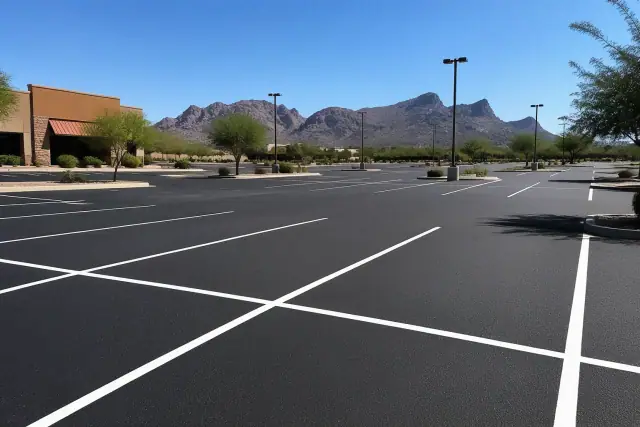
Aerial view of a paved asphalt parking lot at an office complex in Scottsdale, AZ with desert mountains in the distance.

Asphalt Paving in Apache Junction, AZ: Driveway and Parking Lot Repair

Scottsdale Asphalt provides asphalt paving in Apache Junction, AZ for asphalt paving, driveway installation replacement, parking lot paving, asphalt repair, resurfacing overlay, sealcoating, crack sealing, pothole repair, parking lot striping, and asphalt milling removal. We serve properties near Apache Trail, Old West Highway, Idaho Road, the US-60 Superstition Freeway corridor, and the Superstition Mountain foothills. Our crews match the scope to the pavement condition, whether a home needs a driveway replaced or a business needs a deteriorated parking lot resurfaced. Every recommendation starts with the local realities of desert heat, monsoon water, and base preparation.

Apache Junction pavement is exposed to intense UV, expansive Sonoran Basin soils, and summer surface temperatures that can climb far above the air temperature. Monsoon storms then force water into open cracks, low spots, and weak edges. We assess drainage, subgrade stability, and visible distress before recommending patching, overlay, reconstruction, or maintenance. That gives you a practical scope instead of a one-size-fits-all paving quote.

Our regular Apache Junction service area includes Gold Canyon, Mesa, Queen Creek, Chandler Heights, San Tan Valley, and communities throughout Pinal and Maricopa Counties. Contact us to schedule an on-site estimate and get clear answers before work begins.

★ ★ ★ ★ ★5/5 Customer Rating - 26 Years in the Asphalt Trade - Thousands of Paving Jobs Completed - Licensed, Bonded & Insured - Homes, Businesses & Commercial Sites
Asphalt Services

Asphalt Services in Apache Junction, AZ

Scottsdale Asphalt handles the full range of asphalt work local properties depend on, from asphalt paving, driveway installation replacement, and parking lot paving to asphalt repair, resurfacing overlay, sealcoating, crack sealing, pothole repair, parking lot striping, and asphalt milling removal. Apache Junction projects often require extra attention to UV oxidation, drainage transitions, and base movement caused by desert soil. The same Arizona-specific planning also guides our Phoenix-area service pages, including Ahwatukee , while each estimate stays tied to the actual site conditions in front of us.

Commercial Commercial Asphalt Paving

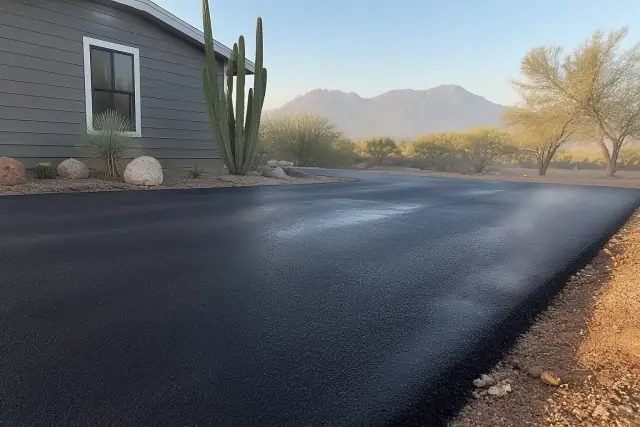
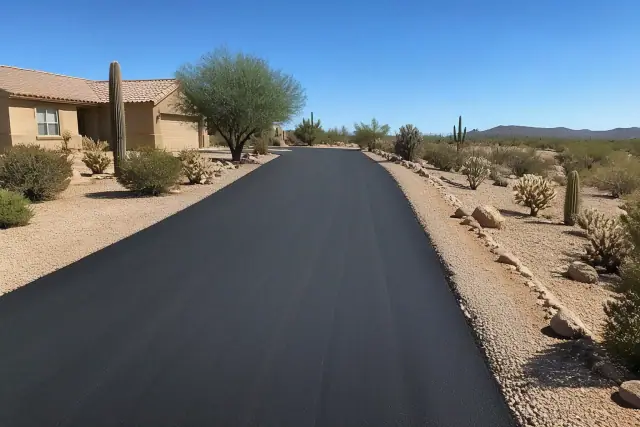
Newly paved asphalt driveway with Superstition Mountains in the background in Apache Junction, AZ.

Asphalt paving in Apache Junction starts with stable subgrade preparation, proper drainage, compacted base, and hot mix placed for Arizona heat. We build new asphalt surfaces for residential driveways, commercial access areas, private lanes, and paved property improvements that need a durable finished surface. Each paving project is planned around site access, slope, edge support, and long-term performance rather than simply placing asphalt over weak ground.

Explore Service

Driveway Installation & Replacement

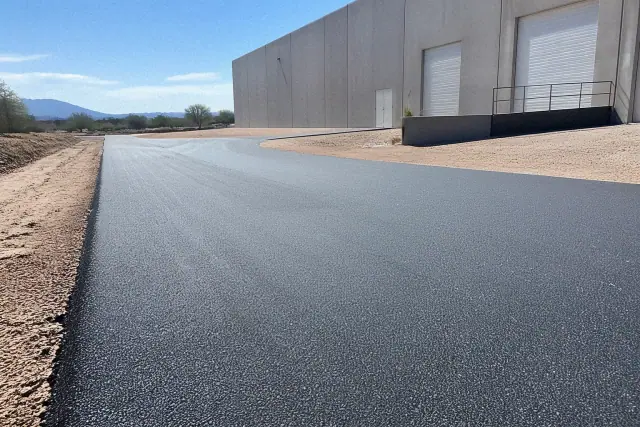
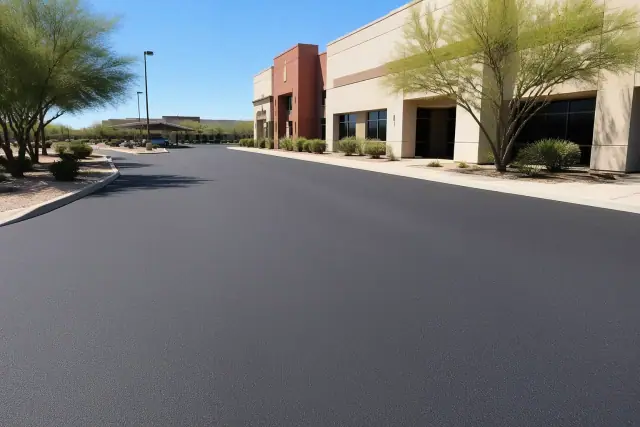
Freshly paved asphalt loading drive at a warehouse in Apache Junction, AZ.

Driveway installation replacement covers both brand-new asphalt driveways and full replacement of failed residential pavement. We remove deteriorated material when needed, shape the driveway for positive drainage away from the structure, compact the subgrade, and install a proper aggregate base before paving. This gives Apache Junction homes a cleaner approach, better edge support, and a surface built to handle desert heat and monsoon runoff.

Explore Service

Parking Lot Paving

Freshly paved asphalt loading drive at a warehouse in Apache Junction, AZ.

Parking lot paving for Apache Junction businesses requires more planning than a small residential driveway because traffic flow, turning loads, drainage, ADA access, and striping layout all affect the finished lot. We pave new commercial lots, reconstruct failed lots, and prepare surfaces that need to stay organized for customers, tenants, employees, and delivery vehicles. The goal is a smooth, professional asphalt lot that drains correctly and supports daily use.

Explore Service

Asphalt Repair

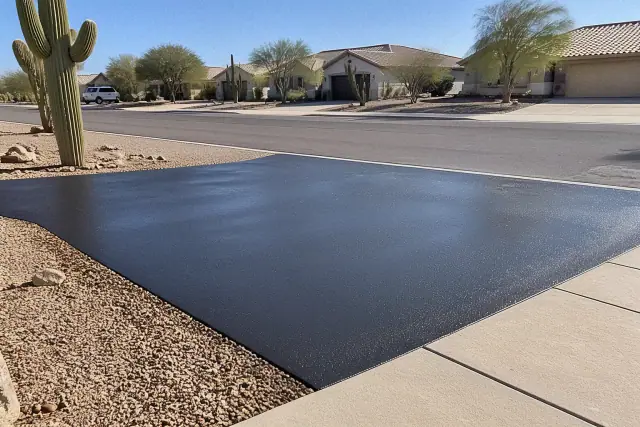
Freshly paved asphalt driveway blending into a street in Apache Junction, AZ.

Asphalt repair addresses cracked, raveled, settled, or broken pavement before the damage spreads into larger structural failure. We inspect whether the problem is surface-level distress or deeper base movement, then recommend the right repair method instead of treating every issue the same way. Targeted asphalt repair can restore damaged areas while helping property owners avoid premature replacement when the base is still serviceable.

Asphalt Resurfacing & Overlay

Freshly sealed asphalt cracks in a restaurant parking lot in Apache Junction, AZ.

Asphalt resurfacing overlay adds a new hot mix layer over existing pavement when the base remains sound. In the right conditions, an overlay can add 1.5 to 2 inches of new asphalt and extend pavement life by 10 to 15 years at a lower cost than full removal and replacement. We check for base failure, drainage problems, edge transitions, and high spots before recommending resurfacing so the new surface does not trap water or reflect old damage too quickly.

Asphalt Sealcoating

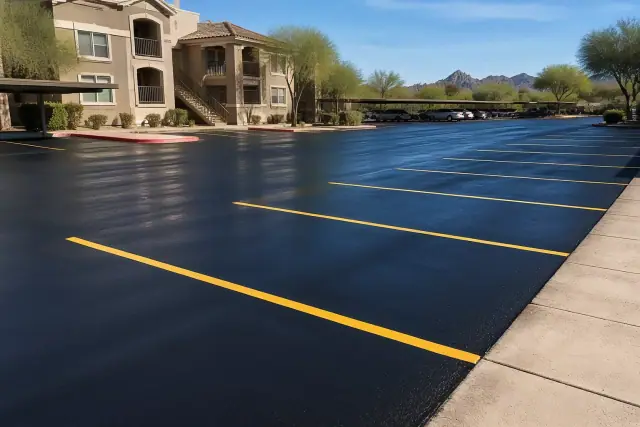
Freshly sealcoated apartment parking lot with yellow stripes in Apache Junction, AZ.

Asphalt sealcoating helps protect pavement from UV oxidation, water intrusion, vehicle fluid staining, and surface raveling caused by the Apache Junction sun. We clean and prepare the surface first, seal eligible cracks before coating, and apply sealer only when conditions support proper adhesion and cure. For new asphalt, sealcoating is typically considered after 6 to 12 months of cure, with resealing often planned every 2 to 3 years depending on exposure and traffic.

Crack Sealing

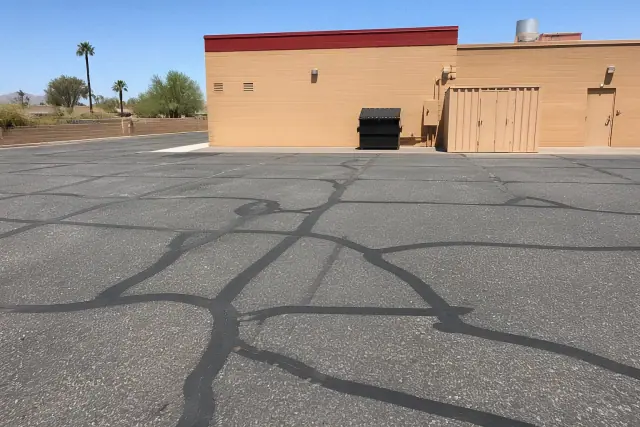
Freshly sealed asphalt cracks in a restaurant parking lot in Apache Junction, AZ.

Crack sealing helps keep water from entering the asphalt base during monsoon storms and seasonal temperature swings. We prepare eligible cracks and fill them with hot-applied rubberized sealant designed to bond to both crack faces while allowing movement. This service is most effective on cracks that have not turned into widespread alligator cracking or major base failure.

Pothole Repair

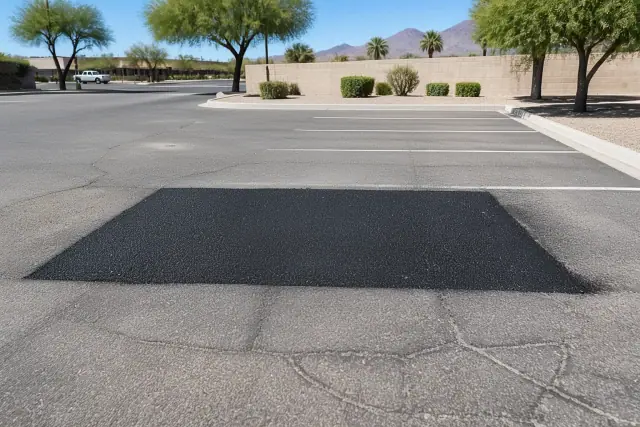
Freshly compacted asphalt pothole repair in a commercial parking lot in Apache Junction, AZ.

Pothole repair starts by removing loose material and determining whether the hole is only a surface failure or a sign of deeper base problems. We square or clean the repair area as needed, correct unstable material when required, and place hot mix so the patched area sits flush with the surrounding pavement. Prompt pothole repair helps reduce trip hazards, tire damage, water intrusion, and continued breakdown around the failed area.

Parking Lot Striping

Newly paved parking lot with fresh white stripes and desert mountain views in Apache Junction, AZ.

Parking lot striping gives a paved lot clear parking stalls, traffic direction, accessible spaces, and safer movement for drivers and pedestrians. We stripe new lots after paving, refresh faded layouts, and coordinate markings after resurfacing or sealcoating once the surface is ready for paint. Clean striping helps Apache Junction commercial properties look organized and easier to navigate.

Asphalt Milling & Removal

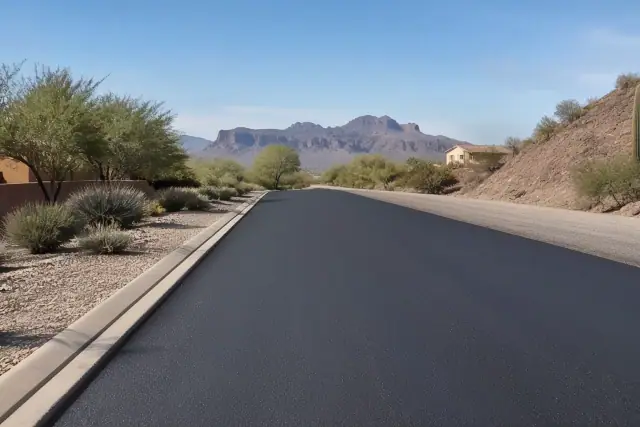
Freshly paved asphalt road with desert mountain views in Apache Junction, AZ.

Asphalt milling removal is used when damaged asphalt needs to be cut down, removed, or prepared before overlay, grade correction, or reconstruction. Milling can improve transitions at concrete, curbs, utility covers, and existing pavement edges while creating a better bonding surface for new asphalt. When pavement damage is too deep for surface repair, removal allows the failed material to be replaced instead of hidden under a short-lived patch.

Pavement Planning

How to Choose the Right Asphalt Service in Apache Junction

The right scope depends on what has failed: the surface, the base, the drainage path, or the maintenance schedule. Apache Junction's heat and monsoon conditions make shortcuts expensive because hidden base problems quickly reflect through a new surface. We separate patch, sealcoat, overlay, and reconstruction recommendations by inspecting the distress pattern before quoting the work.

Match the Repair to the Base Condition

Surface raveling, isolated potholes, and edge cracking can often be handled with targeted repairs, but pumping, settlement, or broad alligator cracking call for deeper work. We look for signs that the subgrade has shifted or lost support before recommending a patch. That prevents a cosmetic fix from failing after the next heavy rain or traffic cycle.

Plan for Drainage Before Paving

Positive drainage is one of the most important choices in a desert paving project. Sudden monsoon rainfall will exploit low spots, unsealed joints, and weak driveway transitions quickly. We grade surfaces away from structures and pay close attention to curb, gutter, and edge details so water does not sit on the pavement or enter the base.

Use Mixes Built for Desert Heat

Apache Junction pavement sees summer surface temperatures that regularly reach 140 to 160 degrees Fahrenheit. Softer asphalt mixes can rut or shove under repeated tire loads in that environment. We specify durable mixes and performance-grade binder appropriate for Arizona's high-heat, high-UV conditions, consistent with ADOT material specifications for desert environments.

Time Sealcoating Around Cure Weather

Sealcoating performs best when the pavement is clean, cracks are filled, and the weather allows proper cure. We avoid applying sealer over contaminated or failing surfaces because adhesion will not hold. Application timing also matters in Arizona because extreme summer heat can flash-dry sealer while monsoon rain can interrupt the cure window.

Maintain Before Surface Distress Spreads

Preventive maintenance is most valuable before surface distress becomes structural damage. Crack sealing, sealcoating, and prompt patching slow oxidation, block water entry, and keep small defects from spreading. For most Apache Junction properties, a planned maintenance cycle costs far less than waiting for base failure and full reconstruction.

Know When Overlay Is Not Enough

Overlay is a strong option only when the existing pavement still has a stable base. Before recommending resurfacing, we inspect and core as needed to look for subsurface water damage, base failure, or severe cracking. If those issues are present, we explain why removal and base correction are the more durable solution.

Apache Junction Asphalt Issues

Common Asphalt Problems for Local Properties

Asphalt in Apache Junction does not usually fail for one reason. UV exposure dries and oxidizes the binder, heavy traffic opens weak areas, monsoon water enters cracks, and expansive desert soils move beneath poorly prepared pavement. Identifying the actual cause is the first step toward choosing the repair that will last.

Request Asphalt Inspection

UV Oxidation and Surface Raveling

Sun exposure turns fresh black asphalt gray as the binder oxidizes and becomes brittle. Once the surface begins raveling, loose aggregate sheds away and small cracks spread more quickly. Sealcoating and timely crack repair help slow that process before the pavement loses too much surface integrity.

Potholes and Base Failure

Potholes form when moisture and traffic exploit a weak spot in the pavement. In Apache Junction, base movement or water trapped under the mat often means a pothole is more than a surface blemish. We remove failed material where needed, recompact the area, and install hot mix flush with the surrounding pavement.

Edge Cracking at Driveway Transitions

Driveway edges and street transitions take extra stress from turning tires, runoff, and unsupported shoulders. When the gutter-to-driveway transition is poorly graded, water can pool at the edge and accelerate cracking during monsoon season. Proper base support and clean transition work reduce the chance of early edge failure.

Monsoon Water Infiltration

A crack that looks minor in dry weather can become a water path during a sudden storm. Water entering the base weakens support and can turn surface cracking into potholes or settlement. Crack sealing, drainage correction, and prompt patching are used together when water has begun attacking the pavement structure.

Rutting, Shoving, and Tire Loads

Rutting and shoving appear as tire-path depressions, waves, or pushed asphalt where traffic loads soften and move the mat. High summer heat makes mix selection and compaction especially important for parking lots, drive lanes, and truck paths. We evaluate whether the issue is surface deformation or a deeper base problem before recommending repair.

Wide Cracks and Alligator Cracking

Alligator cracking is a network of interconnected cracks that usually indicates fatigue and base failure rather than simple surface aging. Sealcoat cannot fix this condition because the pavement has lost structural support. The failed area should be removed, recompacted, and patched or reconstructed depending on the extent of the damage.

Why Choose Us

Why Choose Scottsdale Asphalt in Apache Junction?

Scottsdale Asphalt understands the mix of residential driveways, commercial corridors, and light industrial pavement demands around Apache Junction. The city's 38,499 residents are served by roads and private lots that also carry regional traffic along Apache Trail, Idaho Road, and the US-60 corridor. We bring local paving knowledge, careful site preparation, and transparent recommendations to each project instead of pushing the same answer for every surface.

Local Apache Junction Pavement Knowledge

Terrain changes quickly from developed commercial areas near US-60 to rural and semi-rural properties approaching the Superstition Mountains. Our crews adapt drainage design, base work, and mix selection to the site rather than relying on generic suburban assumptions. That local experience matters on sloped driveways, wide parking lots, and properties with challenging desert runoff.

Residential and Commercial Project Planning

Homeowners need clean work areas, reliable communication, and driveway transitions that do not trap water. Commercial properties need access planning, ADA stall marking, traffic flow layout, and durable surfaces for daily customer and employee use. We plan each project around how the pavement will actually be used.

Clear Estimates and Permit Guidance

Because Apache Junction crosses Pinal and Maricopa County jurisdictions, larger commercial, municipal, and right-of-way projects may involve City of Apache Junction, county, and Arizona Registrar of Contractors requirements. We help property owners understand the permit path before work begins and provide itemized estimates tied to site conditions. The company also carries bonding and insurance coverage for the protection of property owners during the project.

Simple Process

Our Asphalt Paving Process in Apache Junction

Every project follows a disciplined sequence because asphalt performance depends on the foundation, temperature, drainage, and compaction. We start with the condition of the site and then move through preparation, base work, hot mix placement, compaction, and final grade review. The result is a clear scope that fits the property instead of a rushed surface-only paving job.

01.

Site Assessment and Scope Review

We inspect subgrade condition, drainage patterns, edge support, existing distress, and access for paving equipment. The assessment tells us whether the right solution is patching, sealcoating, overlay, full reconstruction, or a new installation. You receive a written scope before work begins.

02.

Demolition, Grading, and Subgrade Compaction

Failed asphalt, loose base, and unsuitable material are removed where the scope calls for it. We grade the surface for positive drainage and compact the native subgrade so the pavement has stable support. This step is where many shortcuts happen, so we do not skip it.

03.

Aggregate Base Installation

A compacted aggregate base is placed and shaped to the required grade before asphalt arrives. Base thickness and compaction depend on the property type, expected traffic, and existing soil conditions. A strong base spreads vehicle loads and helps the surface resist cracking and settlement.

04.

Tack Coat and Hot Mix Placement

Where new asphalt must bond to existing pavement or concrete, tack coat is applied to the prepared surface. Hot mix is delivered from the plant and placed within the proper temperature window, typically 275 to 325 degrees Fahrenheit at laydown. This timing helps the material compact properly before the mat cools.

05.

Roller Compaction and Grade Check

After placement, we compact the mat with steel drum and pneumatic tire rollers to build density. The crew checks grades, transitions, and drainage while the material is still workable. Good compaction helps reduce premature raveling, rutting, and water intrusion.

06.

Cure Time and Maintenance Guidance

New asphalt is usually open to foot traffic within a few hours and vehicle traffic within 24 to 48 hours, depending on ambient conditions. We explain any site-specific precautions, such as avoiding repeated parking in the same spot during early cure. Before leaving, we review maintenance timing for crack sealing and sealcoating.

Result Examples

Asphalt Outcomes for Apache Junction Homes & Businesses

Case Study 1: For a residential driveway off Apache Trail, the right outcome may be full excavation, compacted base, new hot mix, and drainage that carries water away from the home. That approach protects the street transition and gives the driveway a realistic path to long service life with routine maintenance.

Case Study 2: For a commercial lot near Idaho Road or the US-60 frontage, resurfacing may combine milling, overlay, striping, and ADA stall marking so the property returns to service with clear traffic flow. The goal is to minimize disruption while correcting the surface issues that affect customers and tenants.

Case Study 3: For rural and semi-rural properties near the Superstition Mountain foothills, grading and edge support can matter as much as the asphalt mat itself. We plan long drives and sloped approaches around runoff, soil movement, and future maintenance access.

Get Better Pavement

Schedule an Asphalt
Paving
Estimate

Whether you need a driveway patch, a new asphalt installation, parking lot resurfacing, or a long-term maintenance plan, Scottsdale Asphalt can evaluate the site and explain the practical options. Tell us what you are seeing now, and we will schedule an on-site estimate for your Apache Junction property.

Asphalt Paving Help

FAQs About Asphalt Paving in Apache Junction, AZ

These FAQs cover the asphalt paving, repair, sealcoating, overlay, maintenance, and permitting questions Apache Junction property owners ask most often. For a site-specific answer, call Scottsdale Asphalt or request an on-site estimate.

Call Our Asphalt Experts

New asphalt is typically ready for foot traffic within 2 to 4 hours and vehicle traffic within 24 to 48 hours under normal conditions. In Apache Junction summer heat, where air temperatures can exceed 110 degrees Fahrenheit and surface temperatures can reach 150 to 160 degrees, we often recommend waiting the full 48 hours before heavy vehicle traffic. Avoid parking in the same spot repeatedly for the first 2 to 3 weeks while the binder fully sets. Sealcoating also needs 24 to 48 hours of cure time and should not be applied when monsoon rain is forecast in that window.

Asphalt bonds to concrete with surface preparation and a tack coat. We clean debris, oil, and loose material before applying an emulsified asphalt tack coat, typically at 0.05 to 0.15 gallons per square yard depending on surface porosity. The tack coat must break from brown to black before hot mix is placed, and transitions are feathered or milled to avoid a lip where water can enter.

Low-traffic residential streets in Arizona can last 20 to 30 years with proper maintenance, while moderate-traffic arterials often see 15 to 20 years and high-traffic highways may need rehabilitation within 10 to 15 years. In Apache Junction, UV oxidation and thermal cycling can start surface raveling and cracking within 5 to 7 years on unmaintained pavement. Crack sealing, sealcoating, and timely patching extend the useful life before major reconstruction is needed.

An asphalt overlay places 1.5 to 2 inches of new hot mix over an existing pavement with a structurally sound base. It is appropriate when the surface has oxidation, minor cracking, or texture loss but no alligator cracking, subsidence, or moisture-damaged base. When those conditions are met, overlay can add 10 to 15 years of service life at a lower cost than full-depth removal.

Sealcoating adds a protective layer that blocks UV radiation, repels water, and resists petroleum drips from vehicles. That matters in Apache Junction because high UV exposure causes asphalt binder to oxidize, turn gray, become brittle, and ravel. Sealing on a 2 to 3-year cycle helps preserve flexibility and delays more expensive patching or resurfacing.

Cost depends on area size, asphalt depth, subgrade condition, equipment access, grading needs, and whether existing pavement must be demolished and removed. Residential driveways and commercial lots price differently because scale, traffic loads, drainage, and preparation requirements differ. Scottsdale Asphalt provides itemized estimates after seeing the site rather than quoting a one-size-fits-all price over the phone.

Permit needs depend on location, property type, and whether the work affects the public right-of-way. Apache Junction includes Pinal County and Maricopa County portions, so permit authority can depend on the property location; commercial work, drainage changes, curb-cut modifications, and right-of-way work may require City of Apache Junction, Pinal County, or Maricopa County review. We advise you on the likely permit path before the project starts.

In Apache Junction, new asphalt is usually allowed to cure for 6 to 12 months before its first sealcoat. After that, resealing every 2 to 3 years is a common schedule, depending on traffic, sun exposure, and surface condition. The surface should be cleaned and cracks should be filled before sealer is applied.

Patching is usually the right choice when damage is isolated and the surrounding pavement and base are still stable. Examples include localized potholes, limited edge cracking, or surface-only raveling. Replacement or reconstruction becomes more appropriate when failure is widespread, the base has shifted, or alligator cracking shows the pavement has lost structural support.

For many Apache Junction properties, crack sealing every 1 to 2 years is a practical maintenance interval. Hot-applied rubberized sealant works best on cracks under 1 inch wide that do not show base subsidence. Wider cracked areas should be evaluated for removal and patching instead of being treated as surface cracks.

Monsoon rain can quickly expose low spots, weak edges, and poor street transitions. When water sits on asphalt or enters cracks, it weakens the base and accelerates potholes, settlement, and cracking. Proper grading, compacted base work, and clean edge transitions help move water away from the pavement.

Hot mix must be placed and compacted while it is still within the correct temperature range, commonly 275 to 325 degrees Fahrenheit at laydown. Once in service, Apache Junction asphalt also has to withstand summer surface temperatures that regularly reach 140 to 160 degrees Fahrenheit. Mix selection, compaction, and maintenance timing all account for that heat.

Many commercial projects can be scheduled to reduce downtime, but the exact access plan depends on lot layout, size, tenant needs, and cure time. Scottsdale Asphalt works with owners, contractors, and facility managers to plan resurfacing, reconstruction, striping, ADA markings, and traffic flow markings around the property's operation. We confirm access expectations before work begins.

Scottsdale Asphalt serves Apache Junction and nearby communities including Gold Canyon, Mesa, Gilbert, Chandler, Queen Creek, San Tan Valley, Florence Junction, Superstition Springs, and Chandler Heights. We also travel throughout Pinal County and Maricopa County for commercial and municipal projects. If your property is near the Apache Trail corridor, Idaho Road, Lost Dutchman State Park approach, or US-60 frontage, contact us to confirm coverage.

Maintenance slows the deterioration curve by sealing cracks, protecting the surface from UV exposure, and patching distressed areas before they spread. A typical program includes crack sealing every 1 to 2 years, sealcoating every 2 to 3 years, and prompt patching. Without maintenance, asphalt in the area often needs major rehabilitation after 13 to 17 years; with proper maintenance, it can remain serviceable for 25 years or more.